
That fresh, flowery smell from a load of laundry is mostly fragrance, not cleanliness. Fragrance is added to make detergent more appealing, and it has nothing to do with how well the product cleans. For some people, it is also a common trigger for skin irritation and allergies.
Unscented detergents leave the perfume out. Before you switch, it helps to understand what unscented really means, who benefits most, and what to look for on the label.
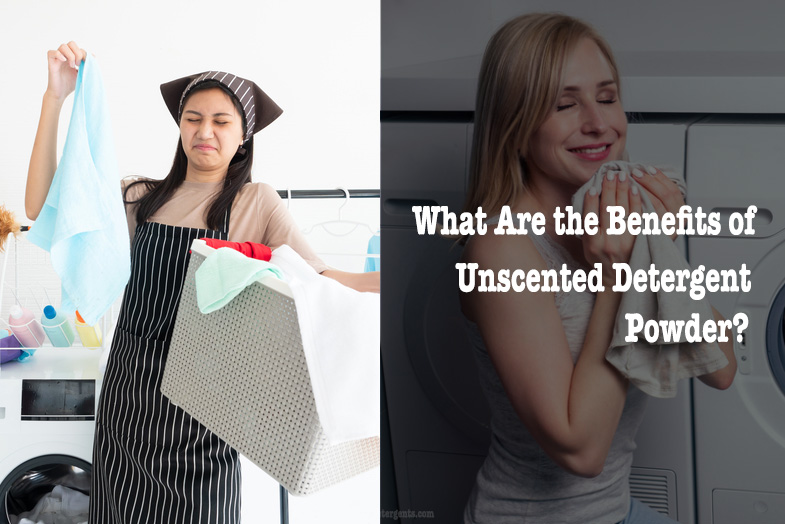
The main benefit of unscented detergent powder is that it avoids added fragrance, a common trigger of skin irritation and allergic reactions. That makes it a good choice for sensitive skin, babies, eczema and allergies. It cleans just as well as scented powder. Look for “fragrance-free” on the label, because “unscented” products can still contain masking fragrance.
Scented Detergent Powder
Many detergent ingredients have a faint chemical or soapy odor on their own. Manufacturers add fragrance to cover it up and to give laundry a pleasant smell people associate with freshness.
For most people, scented detergent is fine. The problem comes from wearing clothes all day. Fragrance residue stays on fabric and sits against your skin, and in some people it can cause rashes, itching or other allergic reactions. Fragrances are one of the more common causes of contact allergies, and they can bother people with sensitive skin or asthma.
We tend to believe that clothes that do not smell flowery are not clean. That is not true. Clean laundry can have no smell at all. A strong perfume can even mask odors that a wash did not remove.
Cleaning ingredients such as surfactants and enzymes do the real work. A scent only changes how the laundry smells.
How Is Unscented Detergent Powder Different?

Unscented powder has no fragrance added for its smell. The cleaning ingredients are largely the same as in regular detergents, so it cleans just as well.
You will find these products labeled “unscented,” “fragrance-free,” “free and clear” or “hypoallergenic.” These labels do not all mean the same thing, as the next section explains.
Unscented vs. Fragrance-Free
The two terms sound alike, but they are different. “Fragrance-free” means no fragrance ingredients were added. “Unscented” means the product has little or no noticeable smell, but it may contain a masking fragrance to cancel out the odor of other ingredients.
“Hypoallergenic” and “natural” are not tightly regulated for detergents, and neither guarantees that nothing will cause a reaction. Read the ingredient list or the manufacturer’s website, and look for “fragrance-free” if you are sensitive.
Is Unscented Detergent Powder Harmful?
Unscented detergent is not harmful when used as directed. Like any cleaning product, it contains surfactants and other ingredients that can bother some people, and it should never be swallowed or used on skin.
Because “unscented” products can still contain masking fragrance, check the ingredient list. If you react to one, switch to a fragrance-free product and rinse your laundry well.
Detergents do end up in wastewater. Most modern detergents are designed to break down, and treatment plants remove much of them. Still, using only the amount you need is better for your wallet and for waterways. Our article on how laundry detergent affects the environment covers this in more detail.
Read More: Are Fabric Softeners Good for Asthma?
Why Use Unscented Detergent Powder?
Unscented powder is a good choice if you or someone in your home has sensitive skin. Here are the main benefits.
Benefits
- Good for sensitive skin. Fragrances are a common cause of contact allergies. If you get rashes or itching that you cannot explain, a fragrance-free detergent is a smart first change. Some dyes, enzymes and preservatives can also irritate, so a product made for sensitive skin is usually best. If problems continue, see a doctor. Read more: Can Your Detergent Impact Your Acne and Skin?
- Good for baby clothes. Babies have delicate skin, and many parents choose fragrance-free laundry products as a precaution. Rinse well, and ask your pediatrician if your baby has eczema or a rash.
- Fewer added ingredients. Leaving out fragrance means one less ingredient on the label, which can simplify choosing a product. That does not automatically make it better for the environment, so look for other eco features, too.
- It cleans well. The cleaning ingredients are the same in scented and unscented versions. Without a flowery smell, clothes are still clean. You may just notice the absence of perfume at first.
- Helpful if you are sensitive to smells. Strong laundry scents can bother people with asthma, migraines or fragrance sensitivity. Fragrance-free laundry can make a home more comfortable. Our laundry detergent guide for allergy sufferers has more tips.
Possible Downsides of Fragrance
Fragrance is a mixture of many compounds, and not all of them cause problems. Some fragrance ingredients are known allergens, and they are required to be listed on labels in some regions. Reactions can include skin rashes, sneezing and respiratory irritation in sensitive people.
Exposure to fragrance from laundry is usually low, but it adds up with other scented products such as soap, lotion and air fresheners. If you notice symptoms that come and go with certain products, try removing scented items one at a time.
Claims that laundry fragrance causes cancer or fertility problems are not supported for everyday exposure from detergent. If you are worried about a specific ingredient, check reliable sources such as government safety databases or ask a healthcare provider.
Fragrances and the Environment
Some fragrance ingredients break down slowly, and traces of detergents reach waterways. Wastewater treatment removes much of this, but not everything. Reducing the amount of product you use, avoiding unnecessary extras and choosing products with transparent ingredient lists all help.
How to Choose the Best Laundry Detergent

Detergents come as liquids, powders and pods. After you choose a form, think about these features.
Type of Clothes
Think about what you wash. Detergents for delicate baby clothes differ from those for heavily soiled work clothes. If you wash a lot of white items, a detergent with oxygen bleach can help keep them bright. Some detergents also include softening ingredients, which can reduce the need for separate fabric softener. Never mix bleach with other cleaning products.
Fragrance
Scent is a personal choice. Many people like scented detergent for the fresh smell when they take clothes out of the dryer. Scents include ocean, floral, lavender and jasmine.
Unscented and fragrance-free detergents are available for people who are sensitive, and they are usually the best choice if you have asthma or respiratory sensitivities.
Other Ingredients
If you want a more eco-friendly product, you can find powders with plant-based surfactants and minimal additives. Here are some ingredients you may see:
- Enzymes break down specific stains, such as protein, grass or starch. Most people tolerate them well, but some sensitive people may react, so choose enzyme-free versions if you do.
- Optical brighteners make whites look brighter. They are not needed for dark clothes, and some people avoid them.
- Surfactants lower the surface tension of water so it can lift oils and dirt from fabric.
- Preservatives prevent microbes from growing. Dry powders usually need fewer than liquids. In some people, certain preservatives can cause skin or eye irritation.
Size of the Container
Powder detergents generally keep longer than liquids as long as they stay dry, so buying a bigger box can save money. Store it in a cool, dry place with the lid closed. Learn more in our guide on the best way to store laundry detergent.
Type of Washing Machine
Match the detergent to the washer. High-efficiency (HE) machines need HE detergent, which creates fewer suds. Too many suds can affect cleaning and wash performance. Check your machine manual, and see our powder laundry detergent do’s and don’ts.
Read More: 10 Laundry Detergent Types You Must Know
Scented, Unscented and Fragrance-Free at a Glance
| Type | What it means | Best for |
|---|---|---|
| Scented | Contains added perfume | People without fragrance sensitivities |
| Unscented | Little or no smell, but may contain masking fragrance | Mild sensitivity; read the ingredient list |
| Fragrance-free | No fragrance ingredients added | Sensitive skin, allergies, asthma, babies |
How to Switch to Unscented Detergent
- Choose a product labeled fragrance-free, and scan the ingredient list for the word “fragrance” or “parfum.”
- Switch all laundry products at once, including fabric softener and dryer sheets, which are often heavily scented.
- Wash a load of items you already own with a fresh cycle to remove old perfume build-up. An extra rinse helps.
- Measure the right amount. Too much detergent leaves residue that can irritate skin, even without perfume.
- Give it a few weeks. Your nose may need time to adjust to clothes with no added scent.
When Fragrance Matters Most
Fragrance is more likely to be a problem for some people than others. Consider an unscented or fragrance-free detergent if you or someone in your home has eczema, contact dermatitis, asthma or migraines triggered by smells. Babies and older adults with thin, dry skin can also be more sensitive. If you share a home or workplace laundry, remember that other people may be sensitive to strong scents, too.
Remember that detergent is only one source of fragrance. Fabric softeners, dryer sheets, scent boosters and perfumed body products can all add up. Dropping the extras while keeping a fragrance-free detergent is often the quickest way to find out whether scent is the culprit.
Frequently Asked Questions
Does unscented detergent clean as well as scented?
Yes. Fragrance does not affect cleaning power. The surfactants and enzymes do the work.
Will my clothes smell bad without fragrance?
Not if they are properly washed and dried. If clothes smell musty, the problem is usually leftover moisture or residue, not the lack of perfume. Dry them fully and clean your washing machine regularly.
Is hypoallergenic detergent the same as unscented?
No. Hypoallergenic means the maker designed it to be less likely to cause reactions, but the term is not strictly regulated. It may still contain fragrance, enzymes or preservatives.
Conclusion
Unscented, fragrance-free powder is a sensible choice if you have sensitive skin, allergies or asthma, or if you simply do not like strong scents. It cleans just as well as scented powder.
Labels can be misleading, so check the ingredient list. “Hypoallergenic” does not guarantee that nothing will bother you. If your skin or breathing still reacts, try another fragrance-free brand and talk to a doctor.
Even if nobody in your home is sensitive, choosing a fragrance-free detergent is a reasonable way to cut down on added ingredients.