


Finding fleas in your clothes or bedding is miserable, and it is a common problem for anyone with a cat or dog. The good news is that your washing machine is one of your best tools for dealing with them.
Yes, washing clothes in hot water with laundry detergent kills fleas, larvae, and eggs on fabric. Heat does most of the work, and the detergent helps by breaking the water’s surface tension so the insects drown and rinse away. Washing alone will not end an infestation, though. You also need to treat your pets and your home.
To stop fleas for good, you have to find where they are coming from, usually a pet, and break their life cycle. This article explains how fleas get onto your clothes, how to wash them out, and what else you need to do around the house.
How Do Fleas Spread to Clothes?

If you have a dog or cat, your pet is the most likely way fleas get into your home. Fleas jump onto animals outdoors and ride inside, and your pet becomes their host.
From there, they spread quickly because of how they reproduce. Flea eggs are smooth and do not stick to fur. They fall off your pet and land wherever it walks, sleeps, or rests.
That is why eggs and larvae can end up in carpets, rugs, furniture, bedding, and clothes on the floor. Adult fleas stay close to a host, because they need blood, so you will often find them on your pet or in its bedding.
Eggs hatch into larvae, which hide in dark, protected spots such as carpet fibers and bedding. They later develop into adults that jump onto people and pets. If you wear clothes that have fleas on them, the fleas can bite you.
How to Get Rid of Fleas
A flea problem has three parts: the pet, the home, and the laundry. All three need attention, and you will need to repeat the treatment for a few weeks, because new fleas keep hatching from eggs and pupae.
Wash With Laundry Detergent and Hot Water

Laundry is the easiest place to win. Wash infested items in the hottest water the care label allows, with your regular laundry detergent. Heat is very effective against fleas at every life stage, and pest control guidance generally recommends washing in hot water, around 130 degrees Fahrenheit (54 degrees Celsius), when fabrics can take it. Warm water at 95 degrees Fahrenheit (35 degrees Celsius) is not hot enough to count.
Detergent lowers the surface tension of water, so insects cannot float or cling, and they drown and wash away. Detergent also lifts away the flea dirt (droppings) and eggs on fabric.
After washing, dry the clothes on high heat. A hot dryer kills any survivors, and drying on high heat for a full cycle is a good extra step.
Wash your curtains, bed sheets, throw blankets, tablecloths, and clothes. For delicate items that can’t take hot water, use the hottest setting the label allows, then dry them on the highest safe heat, or have them dry cleaned and tell the cleaner about the fleas.
Clean the Rest of the House
Laundry alone will not solve the problem, because eggs and larvae are spread through the whole house. Vacuum carpets, rugs, upholstery, and pet areas thoroughly, including along baseboards and under furniture. Empty the vacuum bag or canister outdoors right away, sealed in a trash bag.
Wash your pet’s bedding weekly in hot water. Mop hard floors with your usual floor cleaner.
You do not need to sprinkle powdered laundry detergent around the house. It will not control fleas on floors or in the bathroom, and it can irritate pets and children and leave residue behind. Use detergent for washing fabrics, and use proper tools for the rest.
Related Reading:
Can Bacteria Survive After a Clothes Wash?
Laundry Detergent: Before or After Clothes?
How Do You Kill Germs in Laundry?
Can a Washing Machine Drown Fleas?
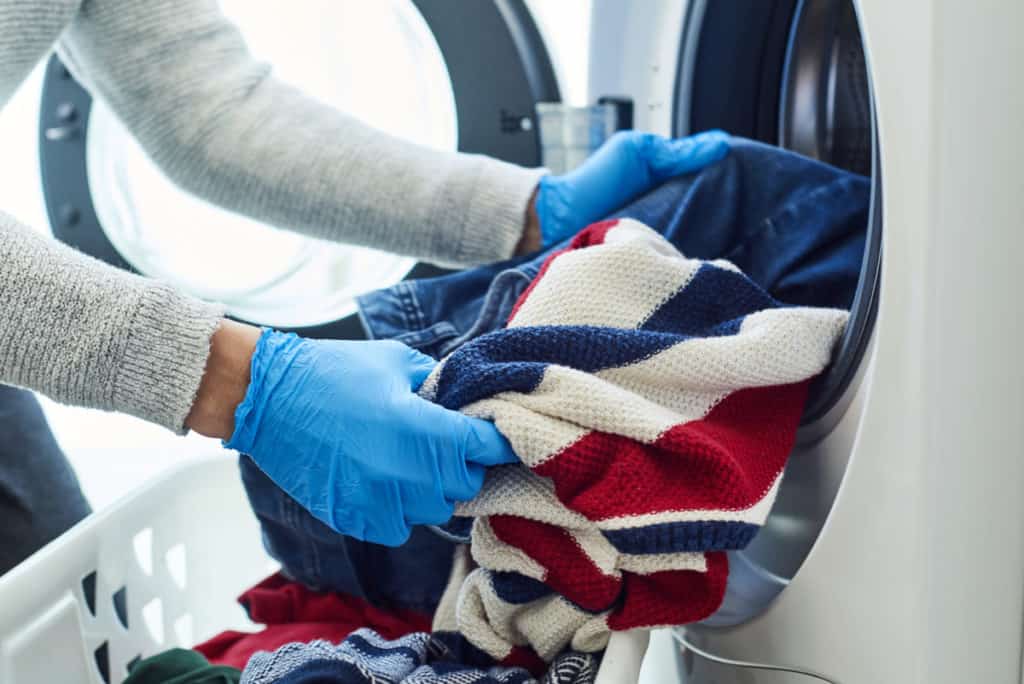
Water alone is not reliable. Fleas can survive a short soak in plain water, because their bodies repel it. Adding detergent breaks the surface tension, and adding heat finishes the job. A full wash and a full dry cycle give you the best chance of killing every stage.
You may have read that boric acid in detergent is what kills fleas. That is not the main reason washing works. Some powder detergents may contain borates, but the heat, the mechanical action of the wash, and the detergent’s surfactants are what do the job, so you do not need to hunt for a particular ingredient.
Other Ways to Deal With Fleas

Washing is the best method for fabrics, but a full flea plan needs a few more steps.
Treat Your Pets First
Pets are the source of most infestations, so treating them is the most important step. Ask your veterinarian which flea treatment is right for your dog or cat, because some products made for dogs are dangerous for cats. Bathing your pet and combing it with a flea comb also helps remove adult fleas.
Keep treating your pets on schedule, even after the fleas seem to be gone.
Use Household Treatments Carefully
For a heavy infestation, use a flea product made for homes and approved for the surface you are treating, and follow the label exactly. Keep pets and children out of the area until it is safe, as directed.
Do not mix bleach with other cleaners, and do not use bleach sprays on furniture, bedding, or pets. Bleach damages fabric and is not a safe or approved flea treatment. Some home remedies, such as boric acid powder, can be toxic if pets or children swallow them, so check with a professional before using them.
Plants, Essential Oils, and Homemade Sprays
Lavender, peppermint, citrus, and clove are often said to repel fleas because of their strong smell. At best, they offer a mild deterrent and will not clear an infestation. Be careful, because many essential oils are toxic to cats and some dogs, and a homemade vinegar and oil spray is not a proven flea treatment.
Natural does not mean risk-free. If you want to use plants or oils, ask your vet first, and keep them out of reach of pets.
Call a Professional if Needed
If you are still seeing fleas after a few weeks of consistent treatment, a licensed pest control company can help, particularly if your yard is also infested.
How Long Does It Take to Get Rid of Fleas?
Expect several weeks. Flea pupae can rest in a cocoon for weeks or longer and hatch when they sense a host, so new fleas keep appearing even after you have treated everything. Keep washing bedding weekly, vacuuming often, and treating pets until you have gone a few weeks without seeing any.
How Do I Know If My Clothes Have Fleas?
Look for tiny dark specks that turn reddish when wet, which is flea dirt, and for small jumping insects on dark fabric, especially near your pet’s favorite spots. Itchy bites around the ankles and lower legs are another sign. If you see any of these, wash the affected items right away and check your pet.
Bag infested clothes before carrying them to the machine so loose fleas do not spread through the house.
Frequently Asked Questions
Does Washing in Cold Water Kill Fleas?
Cold water with detergent may remove many fleas, but it is not reliable. Use hot water when the fabric allows, and finish with a hot dryer.
Does Laundry Detergent Kill Other Bugs?
Detergent and hot water also help remove dust mites, bed bugs, and lice from washable fabrics, though each pest may need its own treatment plan for the rest of the home.
Conclusion
Fleas can spread through a home quickly once they reach your pets. Washing infested fabrics in hot water with detergent and drying them on high heat is an effective way to clean your clothes and bedding.
To fully get rid of them, treat your pets, vacuum thoroughly, and repeat the routine for several weeks. Wash your clothes regularly with laundry detergent in hot water, and keep your pets on a vet-recommended flea prevention program so the problem does not return.