


Doing laundry looks simple, but small habits, like when and where you add the detergent, make a real difference to how clean your clothes get and how long they last. One of the most common questions is whether the detergent goes in before or after the clothes.
Here is the short answer, followed by the details for top-loaders, front-loaders, whites, and colors.
In a top-loading washer, the best sequence is:
- Water
- Detergent
- Clothes
Add laundry detergent before the clothes. In a top-loader, start the water, add the detergent so it can mix, and then add the clothes. Pouring liquid detergent directly onto dry fabric can leave spots. In a front-loader or high-efficiency washer, put the detergent in the dispenser drawer and load the clothes in the drum.
Can I Put Detergent on Top of Clothes?
It is better not to, especially with liquid detergent. Concentrated detergent that sits on dry fabric can leave spots or streaks before it has a chance to dilute.
Most washers have a dispenser for detergent. Many top-load washers do not, which is where the problem usually starts. In that case, pour the detergent into the drum before you add the load.
Once the washer has filled with water, add the right amount of detergent. Do not pour in too much, because many detergents are highly concentrated. Give the water a quick swirl to mix it in, then add your laundry.
Powder detergent is more forgiving. Some people sprinkle it over the top of the load, and because it dissolves in water, it is less likely to leave splotches. If you want to be safe with delicate or dark clothes, add the powder to the drum before the clothes, and use warm or cool water that helps it dissolve fully.
What Happens if You Put Detergent Directly on Clothes?
Detergent poured directly on clothes can leave spots and splotches. If liquid detergent stays on the fabric for a long time before the wash starts, it can leave stains that are visible in daylight.

These marks usually wash out easily if you run the cycle right away. They are harder to remove if the detergent has been sitting on the fabric for hours.
Concentrated detergent can also be hard on some fabrics, particularly dyed ones. Detergent is made to be diluted in water, and fabrics tolerate it best that way. Pouring it directly on the load puts it in contact with the clothes at full strength.
For a closer look at this, see our article on whether you should pour liquid detergent on clothes.
What Is the Correct Way to Do Laundry?
Not knowing the basics can shorten the life of your clothes. Here is a simple step-by-step routine.
Sort Your Laundry
Sorting is the first and most important step. Do not wash colored and white clothes together. Separate them before you start, and keep heavily soiled items, delicates, and towels in their own loads.
If you need a laundry sorter, this one on Amazon is a well-regarded option.
Pretreat Heavy Stains
Pretreating helps when clothes are heavily stained. You do not necessarily need a separate stain remover, since laundry detergent can do the job.
For greasy stains, rub a little liquid detergent into the spot and let it sit for a few minutes before washing. For muddy or dry dirt, you can soak the clothes in a solution of powder detergent first.
Read this post for more information: Soaking Clothes in Detergent: What You Need to Know
Add the Detergent

With a high-efficiency or front-load washer, pour the detergent into the detergent compartment before you start the cycle.
With a top-loading washer that has no dispenser, pour the detergent into the drum, following the order above: water, detergent, and then clothes.
Detergents vary in strength, so there is no single amount that fits every product. Read the instructions on the bottle or box and use the measuring cap or scoop. High-efficiency machines also need HE-labeled detergent.
Select the Right Cycle
Choose a cycle that matches the fabrics in the load, and check the care labels for water temperature. Cold water works well for most everyday clothes and protects colors, while warm or hot water suits very dirty items, if the label allows it. Do not overfill the washer.
Fabric softener is an optional extra. Add it to its own dispenser if you like it, or skip it. Most of your results come from the detergent and from using the right amount at the right time.
Overfilling the washer is a common mistake. Packing in too many clothes strains the machine, and your clothes will not come out as clean, because they cannot move freely through the water.
Can You Put Laundry Detergent Straight Into the Drum?
Yes, in most top-load washers you pour the detergent into the drum because there is no dispenser. Add it to the water first, then the clothes.
High-efficiency and front-load washers have separate compartments for detergent, fabric softener, and sometimes bleach. Use those compartments instead of putting detergent on top of the load. If you are unsure which compartment is which, read our guide on where to put laundry detergent in a washing machine.
How Much Laundry Detergent Should You Add?
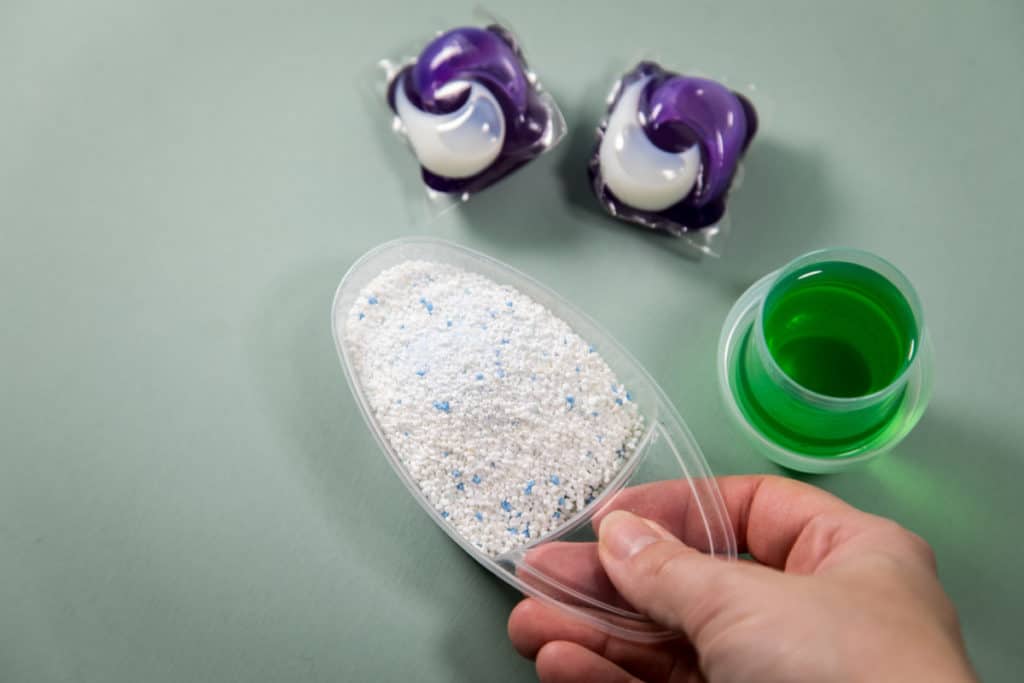
Follow the dosing instructions on the label. The right amount depends on the product’s concentration, the size of the load, how soiled the clothes are, and how hard your water is. A typical concentrated liquid is dosed with a cap line for a normal load, and less is needed for a small, lightly soiled one.
Always measure. More detergent does not mean cleaner clothes. Too much leaves residue on fabric and in the machine, and it can leave clothes feeling stiff or dull.
Do You Use Detergent When Washing White Clothes?
Yes. Whites need detergent just like any other load. Some people add chlorine bleach to keep whites bright, but only when the care label allows it. Here is the correct way to wash whites.
Separate All the Whites
Washing everything together invites trouble. Separate the white clothes from the colored ones, because some colored fabrics release dye in the water, and the dye can settle on the white garments and discolor them for good.
Add Detergent and, if Appropriate, Bleach
If the fabric is bleach-safe, measure the bleach according to the directions on the bottle, and add it to the bleach dispenser or dilute it in the water before the clothes go in. Never pour undiluted bleach straight onto clothes.
Add the detergent in its own compartment, or into the water as you would for colored laundry. Safety note: never mix bleach with ammonia, vinegar, or other cleaners, because the fumes can be dangerous.
Used as directed, detergent and chlorine bleach together can help with stubborn stains on sturdy whites such as cotton towels and tablecloths. If you are unsure about the difference between the two products, read laundry detergent and bleach: what is the difference.

Front-load washers usually have separate compartments for bleach and detergent. Put each product in its proper compartment, and the machine releases them at the right time.
After adding the detergent and bleach, put the white clothes in the washer and start the cycle.
Note: Not every white garment can be bleached. Wool, silk, spandex, and some synthetic blends can be damaged by chlorine bleach. Check the care label first. If it shows a crossed-out triangle, do not use chlorine bleach on that item.
AllAboutDetergents.com
Frequently Asked Questions
Does it matter if I add the clothes first in a front-loader?
No. Front-loaders dispense detergent from the drawer at the right moment, so you can load the clothes first and then fill the drawer.
Can I use a dosing ball or pod in the drum?
Yes, dosing balls and pods can go straight into the empty drum before the clothes. Follow the product directions, and keep pods out of reach of children. See our article on putting liquid detergent in the drum for details.
Detergent and Water Hardness
If you live in an area with hard water, you may need to use the upper end of the dose on the label for the same cleaning results. Soft water needs less. Use the label as your guide and adjust only a little at a time.
Bottom Line
Start the water, add the detergent, and then add the clothes. Avoid pouring detergent on top of the load, because it can cause spots and streaks. In front-load machines, use the dispenser drawer and the order does not matter. Measure carefully, sort your laundry, and read the care labels.
Not sure how much to use? The Detergent Dose Calculator adjusts the dose for your load, water and washer.