


Most modern washing machines come with a detergent dispenser, and many also have separate compartments for bleach and fabric softener. Still, some people take a shortcut and pour the detergent straight into the drum. Is that a problem?
Yes, you can put liquid detergent in the drum, but do it with a dosing ball or similar dispensing device rather than pouring it onto the clothes. A dispenser or dosing ball spreads the detergent evenly through the water, which helps prevent spots, streaks, and uneven cleaning. Use the dispenser drawer if your machine has one.
The dispenser is the method the manufacturer designed, so it should be your first choice. Below, you will see why it matters, how to use it, and how to add detergent to the drum safely when you need to.
Why the Detergent Dispenser Matters
A washing machine is a carefully engineered appliance, and it works best when you use it as intended. Your owner’s manual explains what each part does and how to use it. If you ignore those instructions, you cannot expect the washer to perform at its best.
The detergent dispenser is made for one specific job. In most machines, water flushes the detergent from the drawer into the drum at the right point in the cycle, so the detergent is already diluted when it reaches your clothes. That dilution helps it spread evenly.
If you add detergent to the drum yourself, parts of the load may meet detergent that is still concentrated. Those concentrated areas can leave stains and a film on clothes.
How to Add Liquid Detergent to the Dispenser

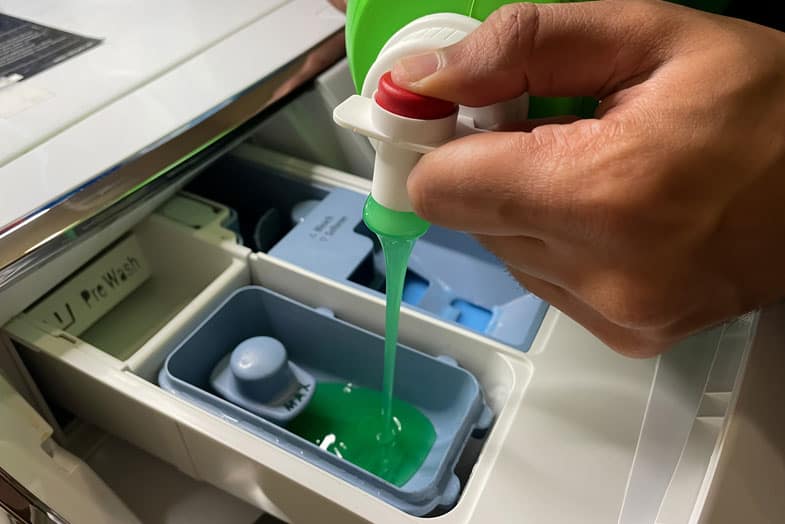
Front-load and high-efficiency washing machines have a separate compartment for laundry detergent, usually in a drawer at the top or front of the machine. Many top-loading machines do not have one.
The drawer typically has three compartments: one for the main wash, one for fabric softener, and one for the prewash. Check the symbols or your manual, because the layout varies by brand.
To add detergent, slide the drawer open and pour the detergent into the main wash compartment, staying below the max line. Use the amount recommended on the detergent label for your load size and soil level. Close the drawer and press Start, and the machine releases the detergent automatically.
Use the measuring cap or a measuring cup so you are not guessing.
Read More: Liquid Detergents: Can It Freeze?
Downsides of Using the Dispenser
For most people the dispenser is the best way to add liquid detergent, but it does have some drawbacks.
Thick liquid detergent can leave residue in the drawer and its channels. Over time, that residue can build up, turn moldy, and slow the flow of water through the drawer. If detergent regularly stays behind after a wash, some of it never reaches your clothes.
Cleaning the drawer every month or so keeps it working properly. Pull it out if your manual allows, rinse it under warm water, and scrub away any buildup with a small brush. Adding too much detergent makes the problem worse. Read more about this in our article on whether liquid detergent clogs pipes.
Some people also find that, in a machine that fills slowly or has weak water flow, the dispenser does not fully flush. In that case, a dosing ball can be a good alternative.
Downsides of Pouring Liquid Detergent in the Drum
The main problem with pouring detergent straight into the drum is staining. If the water and clothes are already in the machine, detergent poured on top can stick to one part of a garment, leaving a spot or a streak.
This happens right before the detergent gets diluted. If your detergent contains blue dye, the marks can be even more noticeable. Our article on blue stains on washed clothes explains what to do if that happens.
Another issue is uneven dissolving. Detergent can get trapped in a bundle of clothes, so it does not reach every item and some pieces stay dirty.
The Right Way to Add Liquid Detergent to the Drum

Sometimes you have little choice. Your dispenser may be broken or clogged, or your machine may simply not have one, as with many top-loaders. That is fine, and the fix is easy.
Dosing Balls
A dosing ball is a reusable ball or cup that holds liquid detergent and releases it as the drum turns. It helps spread the detergent evenly through the water so your clothes do not get stained by concentrated detergent. We cover them in more detail in how to use liquid detergent and dosing balls and our guide to dosing devices.
To use one, fill it to the line marked on the ball, close it, and place it in the drum on top of the clothes. Once the wash cycle starts, the detergent is released and spreads through the water.
Because dosing balls are reusable, they also cut down on packaging waste compared with single-use options. Some detergents even include a ball in the box.
One drawback is noise. A ball can knock against the drum as it tumbles, which some people find annoying. Also, check that the ball is rated for your machine and the cycle you use, because some are not suited to high-speed spin cycles or hot water.
How Much Detergent Should I Add?
The right amount depends on how dirty the laundry is, how big the load is, how hard your water is, and how concentrated the detergent is.
Read the Instructions
Check the dosing instructions on the bottle. They tell you how much to use for different load sizes and soil levels, and they are based on that specific formula.
When to Use a Bit More
If your clothes are dirtier than usual, or your water is hard, you may need to use the higher end of the recommended range. Hard water makes detergent less effective, so some households need a little more.
Do not go overboard, though. Too much detergent produces excess suds, which can make rinsing harder and strain the machine, especially in high-efficiency washers.
Other Ways to Use Liquid Detergent
Some mild liquid detergents are gentle enough that a careful pour is unlikely to cause trouble, but only in a pinch, and it is still better to dilute them first.
Liquid detergent also works as a pretreatment. Dab a small amount on the stain, let it sit for a few minutes, and do not let it dry out, or it can leave a mark. Wash the item in the machine as usual afterward.
Read More: Is Liquid Detergent Bad for Washing Machine?
The More-Is-Better Myth
More detergent does not mean cleaner clothes. When you use too much, the clothes do not rinse out fully, and detergent stays in the fabric. Residue can leave clothes stiff and dull, and for people with sensitive skin it can cause itching or dryness.
Frequently Asked Questions
Can I pour detergent into the drum of a top-loader?
Yes. In a top-loader, start the water first, add the detergent, let it mix, and then add the clothes. That keeps concentrated detergent off the fabric.
Can I put detergent pods in the dispenser?
No. Pods belong in the empty drum, under the clothes, not in the drawer. Keep them out of reach of children.
When Should You Skip the Drum Method?
Skip the dosing ball and use the dispenser when your machine has a working one, especially if it is a high-efficiency model. Some manufacturers recommend against putting anything in the drum for certain cycles, so check the manual first.
Also avoid pouring detergent directly onto dark or delicate clothes, where spots show most, and avoid using a ball in a washer that is already overloaded, because it can get trapped between garments and may not release the detergent.
Keep the Dispenser Clean
A clean dispenser works better, so rinse the drawer every month or so, and wipe away any gel or powder residue. Run an empty hot cycle with a washer cleaner now and then according to the manual, and leave the drawer slightly open between loads so it can dry and stay free of mildew.
Conclusion
You can put liquid detergent in the drum, ideally in a dosing ball. Pouring it directly onto a load of clothes can cause stains and uneven cleaning.
The dispenser remains the preferred method because it was designed for the job. If your dispenser clogs or does not work well, clean it first. If that does not help, switch to a dosing ball, and measure the detergent carefully either way.
Not sure how much to use? The Detergent Dose Calculator adjusts the dose for your load, water and washer.