


Most of us have guessed at the right amount of detergent at some point. Add too much and you get a mountain of suds and clothes that feel stiff. Add too little and the load comes out dingy or smelly. Either way, you pay for it in time, money, and rewashing.
Dosing devices are detergent measuring tools, such as dosing balls for liquid and scoops for powder, that help you add the right amount of detergent to every load. They prevent overdosing and underdosing, which reduces residue, wasted detergent, and rewashing. Anyone who measures by eye can benefit from one.
It is frustrating when clothes come out of the wash covered in residue. It is just as annoying when too little detergent leaves them dirty. If this sounds familiar, a dosing device may be the easy fix. Here is how each one works and how to use it.
What Is a Dosing Ball?
A dosing ball is a ball-shaped plastic container that you fill with liquid detergent and toss into the drum. It is open at one end and has measuring lines marked on the side, so you can fill it to the right level for your load.
That makes dosing quick and mess-free, because you can see exactly how much detergent you are using. You can also use the ball to pretreat stains. A dosing ball helps you get strong cleaning with minimal waste.
The one drawback is noise. A dosing ball is a solid piece of plastic, and as it tumbles in the drum, it can knock against the walls of the machine. Some people find that annoying.
How to Use a Dosing Ball
For Washing Clothes
Check the detergent label for the recommended amount for your load size, then fill the ball to the matching line. You can use a bit less for a small load and a bit more for a large or heavily soiled one, within the label’s range.
Once the ball is filled, close it and put it in the drum with your clothes. Place it toward the back of the drum so the clothes do not cover it completely and the detergent can release evenly as the drum turns.
Do not use a dosing ball to wash items you cannot tumble, and do not fill it past the line. Always check your machine’s manual if you are unsure.
For Pretreating Stains
A dosing ball is handy for pretreating stains. A large detergent bottle can be awkward to pour. It is easy to squeeze out too much, which wastes detergent and can leave a heavy residue on the fabric.
Instead, fill the ball with a little detergent and pour a small amount straight onto the stain. Nothing goes to waste, because you can drop the same ball into the machine with the rest of the load.
Read More: What Are These Blue Stains on My Washed Clothes?
Where to Place a Dosing Ball in the Washing Machine

Fill the dosing ball with detergent and set it inside the drum, in among the clothes. Toward the back of the drum is usually best.
As the drum fills with water and begins to turn, the ball tumbles with the load and releases the detergent gradually, spreading it through the wash water.
The detergent dissolves evenly, so you are less likely to find detergent stains or streaks on clothes. For more on this, see our guide to how to use liquid detergent and dosing balls.
How Big Are Dosing Balls?
Dosing balls vary by brand, but many hold roughly 35 milliliters (about 1 fluid ounce) up to their fill line. That is often enough for a normal load, so check the detergent label, since concentrated formulas call for smaller doses.
You may need a bit more detergent when clothes are very dirty or muddy. In that case, rinse off the worst of the dirt under the tap first, then pretreat the stains and wash as usual. If stains remain after the wash, rewash with detergent rather than piling extra detergent into the first load.
What Is a Powder Scoop?
A powder scoop measures powder detergent. It is usually made of plastic, and many detergent brands include one in the box or tub at no extra charge.
Measuring matters. Too much powder can leave clothes stiff, scratchy, or sour-smelling from leftover residue, while too little can leave them dirty. A scoop takes the guesswork out.
Read More: Are Liquid Detergents Better than Powder?
How to Use a Powder Scoop
Unlike a dosing ball, a scoop does not go into the washing machine. You use it to measure the powder, and then you add the measured amount to the machine.
Overdosing, whether with powder or liquid, leaves detergent residue on clothes and can make them feel stiff and itchy. It can also build up in your machine over time.
Follow the dose on the package for your load size and water hardness. One scoop is often enough for a regular load. Heavily soiled loads may call for more, but only up to the maximum on the label. Using more than that can leave residue and strain your machine.
Most machines have a detergent drawer or dispenser. If there is more than one compartment, the main wash compartment is the right one for detergent. Slide it open, add the powder, and close it again. Do not put powder in the compartments meant for softener or bleach.
How Big Are Powder Scoops?
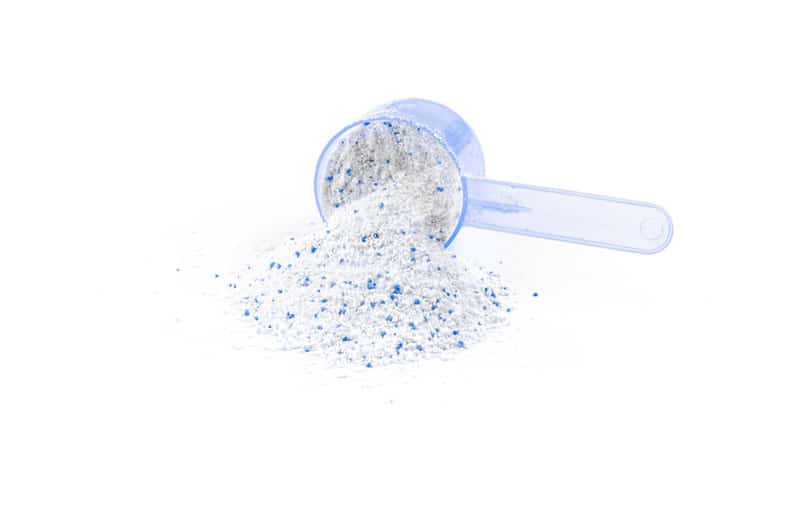
Scoop sizes vary, and a scoop from one brand is not interchangeable with another. Many scoops hold around 100 milliliters when filled to the line, which is the dose for a regular load of that product.
If your clothes are heavily stained, the label may allow a larger dose. Check the instructions for your detergent and do not go beyond them.
Whenever your machine has a dispenser, use it rather than dumping powder directly onto clothes. This helps the powder dissolve fully and avoids clumps, undissolved patches, and residue.
Can You Use Dosing Devices for Hand Washing?
Many people prefer to wash some items by hand. Hand washing is gentler on fabric, and it can use less energy and water. It is also the right choice for delicates that a washing machine could damage.
Measuring is just as important when washing by hand. Too much detergent is hard to rinse out, and too little will not clean well. For help with this, see our tips for how to hand wash clothes with detergent.
That is why dosing devices work well for hand washing too. They give you a consistent, repeatable amount each time.
Dosing Ball
As a rough guide, about 17 milliliters (a little over 1 tablespoon) of regular liquid detergent is enough for around 5 liters (1.3 gallons) of water. Always check the label for your product, because concentrations differ.
Fill a basin or tub with water and add the measured detergent, using the dosing ball as a measuring cup. Swish the water with your hand until the detergent is dissolved, then add your clothes. Gently squeeze and rub the fabric to work the soapy water through the stains.
Finish by rinsing the clothes in clean, cool water until the water runs clear and no suds remain. Cool water helps rinse away leftover detergent and loosened dirt.
Powder Scoop
As a rough guide, about 85 milliliters of powder works for around 10 liters (2.6 gallons) of water, but check your detergent’s label because formulas differ.
Add the measured powder to a basin of water and stir until it is fully dissolved. Then follow the same steps as with liquid detergent. A scoop makes hand washing simpler because you can repeat the same amount each time.
Conclusion
Dosing devices are a simple way to get consistent results. Measuring correctly saves detergent, protects your machine, and reduces residue. A dosing ball suits liquid detergent, and a scoop suits powder.
They are easy to use. Fill the dosing ball to the right line and put it in the drum. With a scoop, measure the powder and add it to the dispenser.
If you keep ending up with residue or dingy laundry, a dosing device can help. Check the box or bottle first, because many brands include a free scoop or cap. Otherwise, a dosing ball is inexpensive. For more ideas, browse our guide to laundry detergent accessories.
Not sure how much to use? The Detergent Dose Calculator adjusts the dose for your load, water and washer.