
Laundry is nobody’s favorite chore, and it feels even worse when your detergent is not getting clothes clean. Years ago, powder was the only real choice. Today you can pick from liquids, powders, pods, and more, so which one should you buy?
Neither is better in every situation. Liquid detergent dissolves easily in any water temperature, works well on greasy stains, and is handy for pretreating. Powder usually costs less per load, comes in recyclable cardboard, and is a strong choice for muddy, clay, and outdoor stains. Pick based on your stains, washer, and budget.
This guide compares the two types so you can choose with confidence.
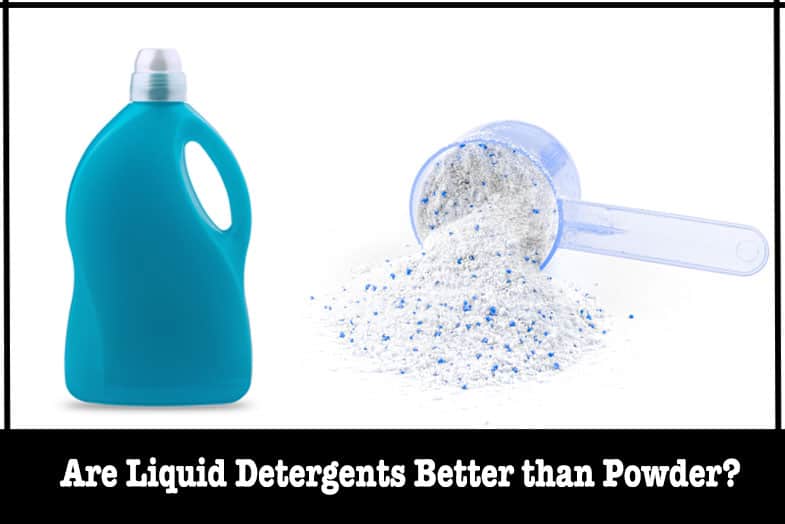
Are Liquid Detergents Better Than Powder?
You cannot crown a single winner. Where liquid detergent shines, powder falls a little short, and the reverse is also true.
In simple terms, choose the type that fits your needs. Each has real advantages and drawbacks, and both clean well when you use the right amount.
Why Choose Liquid Detergent?

It Is Convenient to Use
Liquid detergents are easier to handle than powders. They come in a bottle with a handle that is easy to carry, and you can measure the dose with the cap and pour it straight into the dispenser. Here is more on where to add laundry detergent.
Powder is often messier. You scoop it with a measuring cup, and it is easy to spill some on the floor. It is also usually packed in cardboard boxes or bags, and a box can soften and tear if it gets damp. Plastic bottles avoid that problem.
It Is Gentler on Your Washer

Because liquid detergent is already dissolved, it mixes into the wash water easily. As long as you stick to the recommended amount, it rarely causes trouble. Using too much is the big mistake with any detergent, since extra suds and residue can build up in the machine.
Powder can clump if it does not dissolve fully. Clumps can stick in the dispenser or the drain area of the machine and leave residue on clothes. If you prefer powder, look for formulas designed for your machine type, and for septic systems if you have one.
Water Temperature
Liquid detergent dissolves well in cold, warm, or hot water, so you rarely have to worry about it.
Powders dissolve best in warm or hot water. In cold water, they can leave clumps or a white residue, especially in high-efficiency machines that use less water. To avoid this, dissolve the powder in a little warm water first, or choose a powder labeled for cold-water washing.
Read More: Can Bacteria Survive After a Clothes Wash?
Less Residue on Clothes
Powder detergents contain fillers such as sodium sulfate that help the powder pour and keep it from caking. Fillers do not clean. Liquids use water as the carrier, so the detergent disperses readily in the wash.
If a powder does not dissolve completely, it can leave a white residue on dark clothes. Liquid is less likely to do that, which is helpful if you want to keep dark colors looking rich.
It Works Well on Greasy Stains
Liquid detergents typically rely on nonionic surfactants such as alcohol ethoxylates, which are very effective on oil and grease. If you often deal with kitchen splatters, cooking oil, or greasy work clothes, liquid is usually the better pick.
It Is Ideal for Pretreating Stains
Some stains will not come out in a normal wash. Pretreatment products are sold separately, but a little liquid detergent often does the job.
Powder has to be mixed with water into a paste before you can apply it, which is a hassle. With liquid, simply apply a small amount directly to the stain, let it sit for a few minutes, and wash the garment as usual. Liquid is also a convenient choice for hand washing.
Read More: Liquid Detergents: Can It Freeze?
Pros and Cons of Liquid Detergent
Pros
- Great for greasy and oily stains.
- Easy to apply directly as a stain pretreatment.
- Dissolves easily in any water temperature, which makes cold-water washing simple and saves energy.
- Less likely to clump or leave powdery residue.
- Convenient to measure and pour.
Cons
- Comes in plastic bottles. Many are recyclable, but plastic still adds to waste.
- Usually costs more per load than powder.
- Water makes it heavy, which raises shipping costs and its carbon footprint.
Why Choose Powder Detergent?
Recyclable Packaging
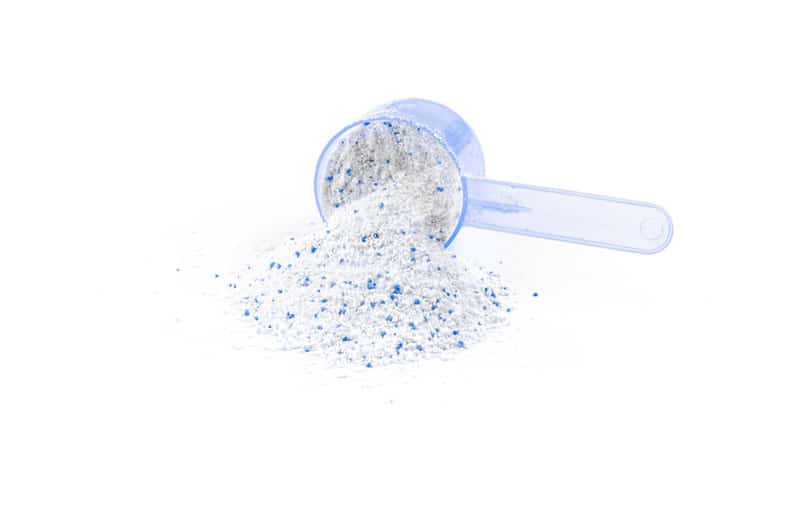
Powder detergent usually comes in a cardboard box, which is lightweight and widely recyclable. Liquid detergent comes in plastic jugs. Many of those jugs can also be recycled, but cardboard is generally the lower-impact option.
Usually Less Expensive
Powder is often cheaper per load than liquid, though prices vary by brand and store. A few things explain the gap.
First, powder is simpler to make because it does not need the extra stabilizers and solvents a liquid needs. Second, it ships in lighter packaging with no added water weight, which lowers transport costs.
Strong on Muddy and Outdoor Stains
Powders generally contain alkaline builders and surfactants such as alkylbenzene sulfonates that do very well on mud, clay, and grass stains. They tend to be less effective against heavy grease than liquids.
If your family comes home covered in dirt from sports or gardening, powder is a good fit. For help with soiled clothes, see our guide to soaking clothes in detergent.
Longer Shelf Life
Powder is a good choice if you like to buy in bulk. Dry powder stays stable for a long time when you keep it sealed in a cool, dry place. Liquids can slowly lose strength over time, so it is smart to buy only what you will use within a year or so and to store them away from heat and freezing temperatures.
Pros and Cons of Powder Detergent
Pros
- Usually cheaper per load than liquid.
- Comes in a cardboard box that is easy to recycle.
- Lighter to ship and carry.
- Stores well for a long time if kept dry.
- Works well on mud, clay, and grass stains.
Cons
- May leave white residue on clothes, especially in cold water or if you overdose.
- Can clump in cold water or in high-efficiency washers if it does not dissolve fully.
- Less convenient for pretreating stains, since you have to make a paste.
Which One Should You Choose?
A few quick rules of thumb can settle the question. If you wash mostly in cold water, own a high-efficiency machine, or deal with greasy stains from cooking or work, liquid is usually the smoother choice. If you watch your budget, buy in bulk, or often wash muddy sports gear and gardening clothes, powder is hard to beat.
Hard water can also tip the balance. Many powders contain water-softening builders that help in hard-water areas, while some liquids rely more on added softeners. If your clothes look dull or feel stiff, try the other type for a few loads and compare, and make sure you are not using too much.
Whichever you pick, store it in a cool, dry place with the lid closed, keep it out of reach of children and pets, and never mix detergent with bleach or other cleaning products.
Not sure about pods? They are a third option that combines pre-measured liquid with a dissolving film, and they are a convenient choice if you hate measuring. Keep them locked away from children and pets, and never use them for hand washing or pretreating.
Conclusion
Liquid and powder detergents both do a good job at home. Which one you should buy depends mostly on the stains you see most often and your budget.
If you want to save money and you deal with mud and grass stains, powder is a sensible choice. If you want convenience, cold-water performance, and strong results on grease, choose liquid.
Whichever you pick, measure carefully and follow the label. If you are still undecided, see how they compare with pods in our guide to liquid, powder, and pod detergent. Happy cleaning!