


Stand in the detergent aisle and you will see three main choices: liquid, powder, and pods. If you have ever wondered which one is right for your laundry, this guide is for you.
Liquid detergent is the best all-rounder and works well as a stain pretreater. Powder is usually the cheapest and handles mud and dirt well but can be slow to dissolve in cold water. Pods are premeasured and the most convenient, but they cost the most, cannot pretreat stains, and must be kept away from children.
No single form is best for everyone. The types of stains you deal with, your budget, your washer, and your household all matter. Below we cover each form, with pros and cons, and then compare them side by side.
Liquid Laundry Detergent

Liquid detergent is newer than powder, but it has become the most popular form in many households. It became widely available around the middle of the twentieth century. People like it because it mixes quickly with water, even in cool temperatures, and is easy to pour and measure.
Liquid detergents come in many scents, and you can also find fragrance-free versions if you or someone in your home is sensitive to fragrances. Because they are already dissolved, liquids are less likely to leave residue in the washing machine.
Liquid detergent usually costs more than powder, but it is typically cheaper than pods.
The packaging is easy to use and store. Liquids come in plastic jugs, and some include a built-in spout that makes pouring easier.
The best feature of liquid detergent is that it works as a stain pretreater. Apply a little directly to the stain, let it sit for a few minutes, and then wash the garment as usual. For more on this, see our guide on whether to pour liquid detergent on clothes.
How to Use Liquid Laundry Detergent
Liquid detergents work especially well on oil and grease. If you often deal with greasy stains, liquid is a strong choice.
You can use liquid detergent in two ways: to pretreat stains and to wash clothes.
Pretreating stains: Apply a small amount of liquid detergent to the stain and work it in gently with a soft brush or your fingers. Let it sit for several minutes, then wash the garment as usual.
Washing clothes: Follow the dosing instructions on the bottle for your load size. Many caps hold more detergent than a normal load needs, so fill the cap only to the line that matches your load. Using too much leaves residue and does not clean better.
Liquid Detergent Pros and Cons
Pros
- Works well for pretreating many kinds of stains
- Usually less expensive than pods
- Available in a wide range of scents
- Fragrance-free versions are available for sensitive skin
- Effective on oil and grease stains
- Dissolves easily, including in cool water
Cons
- Plastic jugs make it less eco-friendly, although many are recyclable
- The high water content makes the product heavy to ship
- Large caps make overdosing easy
- Usually costs more per load than powder
Read More: How to Use Liquid Detergent and Dosing Balls
Powder Laundry Detergent
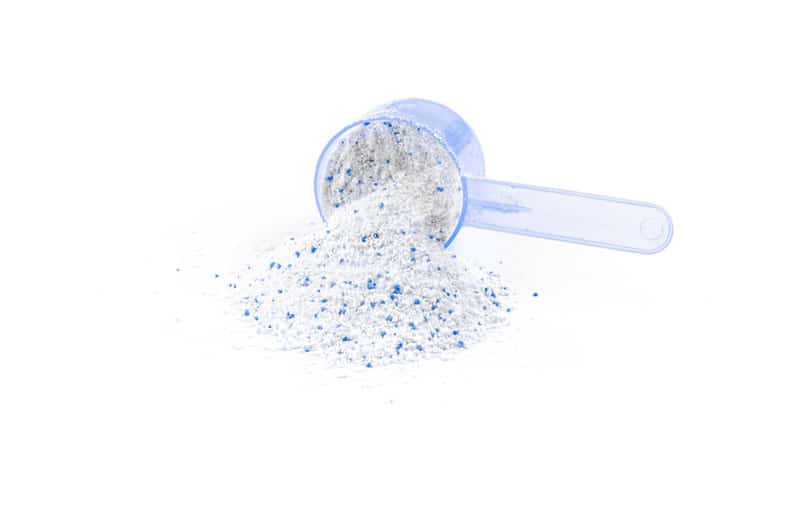
Powder is the oldest form of laundry detergent, and although liquids and pods have taken a big share of the market, it is still a popular choice. It is usually the least expensive per load. Many powders are packaged in cardboard boxes, which are easier to recycle than plastic jugs.
Powder tends to do well on dirt and mud. It is less convenient for pretreating stains, because you have to mix it with a little water to make a paste first.
Many powders contain water-softening ingredients, so they often perform well in hard water. The downside is that powder does not always dissolve completely, especially in cold water or overloaded machines.
Performance varies by formula and brand, and many powders contain bleaching agents that can fade colors. Check the label for color-safe claims, and test a hidden spot if you are unsure. Powder is a good choice if your clothes often get muddy or sweaty from outdoor activity.
Powder boxes are heavy and bulky, so shipping them still has an environmental cost, even though the packaging itself is recyclable.
Read More: What Are the Benefits of Unscented Detergent Powder?
How to Use Powder Laundry Detergent
Dosing matters. Because powder does not dissolve instantly, people sometimes add too much, which leaves a film on clothes and creates extra suds.
Using too little can also leave clothes dirty or smelly. Check the scoop and the dosing chart on the package, and add a little more only for heavily soiled loads.
If your washer has a detergent dispenser, put the powder in the main wash compartment. The machine releases it at the right moment in the cycle.
If there is no dispenser, add the powder to the drum while it fills with water, then add the clothes. That gives the powder time to dissolve. For more tips, read our powder laundry detergent do’s and don’ts.
Powder Detergent Pros and Cons
Pros
- Usually the lowest cost per load
- Often comes in recyclable cardboard packaging
- Generally has a long shelf life when kept dry
- Works well on mud and outdoor dirt
- Often performs well in hard water
Cons
- Large boxes can be awkward to store
- Can leave residue in the washer and on clothes if it does not dissolve
- Spot treating takes more effort
- Cardboard boxes are easily damaged by moisture
- Does not dissolve quickly in cold water
Detergent Pods
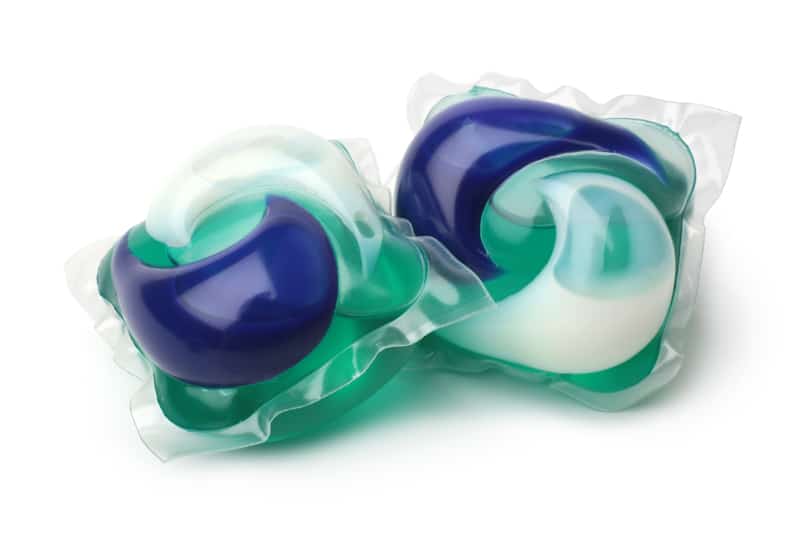
Detergent pods are the newest option, introduced in the early 2010s. They quickly became popular because they are compact, premeasured, and easy to carry when you travel. Pods come in many sizes and scents.
A pod is a small packet of concentrated detergent sealed in a thin, water-soluble film. The film dissolves in the wash and releases the detergent. Some pods also include extra ingredients such as stain fighters or brighteners, so you may not need separate additives.
The best thing about pods is that you cannot overdose by accident. Each pod holds a measured dose, so there are no spills and no measuring cups. You just add a pod and start the machine.
Pods can clean as well as other forms of detergent when used properly, but you cannot adjust the dose for a very small or very large load.
How to Use Detergent Pods
Place the pod at the bottom of the empty drum, then add the clothes on top. Do not put pods in the dispenser drawer unless the manufacturer says so, because they may not dissolve properly. Do not cut or puncture a pod. Use one pod for a normal load, and follow the package for larger loads.
If you travel often, pods are handy. Instead of carrying a heavy jug or box, you can pack a few in a small bag.
Pods are also a risk in homes with young children. Pods look like candy, and swallowing one can cause serious harm. Store them in their original container, tightly closed, and out of sight and reach. If a child swallows a pod or gets detergent in the eyes, call Poison Control (1-800-222-1222 in the United States) or emergency services right away.
Pod Pros and Cons
Pros
- Travel friendly and easy to carry
- Compact and easy to store
- Premeasured, with no risk of overdosing
- Some include extra cleaning ingredients
- Available in many scents
- Lightweight and easy to handle, which helps people with limited strength
Cons
- Cannot be used to pretreat stains
- Usually the most expensive per load
- Serious safety risk for young children
- Dose cannot be adjusted for small or large loads
- May not dissolve fully in cold water or overloaded washers
Liquid vs. Powder vs. Pod Detergent at a Glance
| Feature | Liquid | Powder | Pods |
|---|---|---|---|
| Cost per load | Medium | Lowest | Highest |
| Stain pretreating | Excellent | Fair (needs a paste) | Not possible |
| Best on | Grease and oil | Mud and dirt | General everyday loads |
| Cold water | Dissolves well | Can be slow to dissolve | Usually fine, check the label |
| Convenience | Good | Fair | Best |
| Child safety concern | Moderate | Moderate | High |
Each form has strengths. The right one depends on what you wash and how you live. Here is how they compare in the areas that matter most.
Convenience
Powder and liquid both need to be measured before they go into the washer, which can get messy. Pods are premeasured, so you just add one and start the cycle.
That makes pods the most convenient of the three.
Spot Cleaning
Pods are sealed packets meant for the machine, so they cannot be used to pretreat. Powder needs to be mixed with water into a paste first. Liquid detergent can be applied directly.
For spot cleaning, liquid is the best choice.
Storage
Powder comes in cardboard, which can absorb moisture and fall apart, so transfer it to an airtight container. Liquids come in plastic jugs that resist moisture, as long as the cap stays on. Pods are already packaged, but they should stay in a closed container.
In all cases, keep detergent out of children’s reach. Pods require the most care.
Read More: What Is the Best Way to Store Your Laundry Detergent?
Stain Types
Powder is good at muddy stains, while liquid handles greasy and oily stains well. Pods work on both for everyday dirt, although they cannot be used for pretreating.
Think about which stains you see most and choose accordingly.
Budget
If money is tight, powder is usually the cheapest per load. Liquids are in the middle, and pods are typically the most expensive. Compare the price per load rather than the price per package.
Frequently Asked Questions
Which Type of Laundry Detergent Cleans Best?
All three clean well when used correctly. The best choice depends on your stains, water, and washer. Liquid is the most versatile, powder is strong on dirt, and pods are the easiest to use.
Is Liquid Detergent Better Than Powder?
Not always. Liquid dissolves more easily and pretreats stains, but powder usually costs less. Read our comparison of liquid and powder detergents for more detail.
Can I Use Pods in Any Washing Machine?
Pods work in most top-loading and front-loading machines, including high-efficiency models. Check your manual and the pod package for any limits.
Conclusion
Every type of detergent has pros and cons. The right one fits your budget, is easy to use, and handles the stains you see most. If you want to explore other options, read about the laundry detergent types available.
If you travel often, pods are an easy choice, as long as you can keep them away from children. If you are mostly at home and can spend a little more, liquid detergent is the most versatile option.
If budget is your main concern, powder detergent is a solid choice. It cleans well and keeps clothes bright and fresh when used correctly.


