


Sometimes detergent alone cannot handle the grime on white clothes, and you start to wonder whether you need something stronger. Detergent and bleach are often mentioned together, but they do very different jobs.
Laundry detergent cleans clothes by loosening and washing away dirt, oils and stains. Bleach does not really clean. It whitens, brightens and disinfects by chemically breaking down color and germs. Detergent is essential for every wash, while bleach is an optional add-on that only suits certain fabrics.
Both products have a place in the laundry room. Below you will learn how each works, how to use it safely and when to choose one, the other or both. Never mix bleach with other cleaning products.
Using Laundry Detergent on Clothes

Laundry detergent is a cleaning product built around surfactants, which lift dirt and oil off fabric so the water can wash them away. Most detergents also contain enzymes, which help break down specific kinds of stains. Detergent is not the same thing as soap, although both clean.
Because enzymes can attack protein fibers, many detergents are not recommended for wool or silk. Use a detergent made for delicates or wool on these fabrics, and always follow the care label.
Read More: Laundry Detergent: Before or After Clothes?
How Laundry Detergent Works
How well a detergent works depends on its surfactants and on the enzymes in its formula. Different enzymes target different kinds of dirt, which is why detergents with enzymes are often called biological detergents.
They work a bit like the enzymes in your body, which break large molecules into smaller pieces. In the wash, the enzymes break down stains so the loosened dirt can be suspended in the water and rinsed away.
Many everyday stains come from food and body soil, and each enzyme has its own target. Protease breaks down proteins, amylase breaks down starches, lipase targets fats and oils, and cellulase helps keep cotton looking smooth and fresh.
Detergent as a Stain Pretreater
Because detergent is so good at lifting dirt, you can also use it to pretreat stains. You do not have to buy a separate stain remover for most everyday spots.
To pretreat, put a small amount of liquid detergent directly on the stain and gently work it in with a soft brush or your fingers. Let it sit for 10 to 15 minutes, then wash as usual. Enzyme detergents are particularly useful on protein stains such as grass and blood. Use cold water for blood.
How Much Detergent to Use
The right dose is important. Too little detergent cleans poorly, and soil can build up in your machine. Too much is wasteful, and it creates extra suds that can leave residue and are bad for your washing machine.
The dose depends on the detergent, your water hardness, the load size and how dirty the clothes are. Always follow the directions on the package. Modern concentrated detergents need much less than older formulas, so do not simply fill the cap to the top.
Add detergent to the dispenser if your washer has one. Do not pour it directly onto dry clothes, which can cause staining. If there is no dispenser, add the detergent to the water before you put the clothes in.
Read More: Are Liquid Detergents Better than Powder?
Using Bleach in Laundry

Bleach removes color from stains and fabric and kills germs. It works alongside detergent: the detergent lifts away the soil, and the bleach whitens what is left. The most common household bleach is chlorine bleach, which contains sodium hypochlorite.
Chlorine bleach is meant for white, bleach-safe fabrics such as white cotton. It should not be used on wool, silk, spandex or most colored clothes. Color-safe bleaches, which are usually oxygen-based, can be used on most colored fabrics. Always check the care label first.
Bleach Is Not a Cleaner
Bleach whitens and disinfects, but it does not remove soil the way detergent does. Dirt actually reduces how well bleach works, because the bleach is used up reacting with the soil. That is why bleach is best used together with detergent, in a load that is being washed properly.
Bleach can sanitize laundry by killing bacteria and other microorganisms. Different types of bleach are made for different fabrics and jobs, so read the label.
Read More: Can Bacteria Survive After a Clothes Wash?
Bleach as a Brightener
If you are tired of dingy whites, you are not alone. White clothes lose their brightness faster than other clothes because body oils, minerals in the water and everyday soil gradually build up on them.
A bleach product used as directed can restore much of that brightness. If you wash white items with and without bleach over a few cycles, you will usually see the untreated ones turn gray or yellow sooner.
You do need to be careful about which fabrics you bleach. The tips below will help you avoid damage.
Other Uses for Bleach
Bleach is also used around the house for disinfecting hard, non-porous surfaces such as sinks, trash cans and plastic toys. Always dilute it according to the label, wear gloves, ventilate the room and rinse surfaces well afterward.
Never mix bleach with ammonia, vinegar, rubbing alcohol or other cleaners. Together they can release toxic gases.
Use the Right Amount

Most bad experiences with bleach come from using the wrong amount. Too much can weaken or yellow fabric, and too little will not brighten anything.
Adjust the amount for the size of the load and how soiled the clothes are, and always follow the label. As a rough guide, many chlorine bleach labels call for around half a cup for a medium load in a top-loader, with more for large loads. Check your bottle and your washer manual.
Directions for Use

Unlike detergent, bleach is used in small amounts, and too much can ruin your clothes.
Chlorine bleach must always be diluted before it touches clothes. Pour it into your washer’s bleach dispenser, or add it to the full drum of water after the detergent has mixed in. Never pour undiluted bleach directly onto dry clothes.
If you add chlorine bleach by hand, wait until the wash has been running for about 5 minutes. This lets the enzymes and brighteners in the detergent do their work before the bleach reaches them, because chlorine bleach can deactivate enzymes.
Oxygen bleach works best in warm water. Dissolve it in the water first, then add the clothes, and follow the package directions for exact amounts.
Laundry Detergent and Bleach: What Is the Difference?
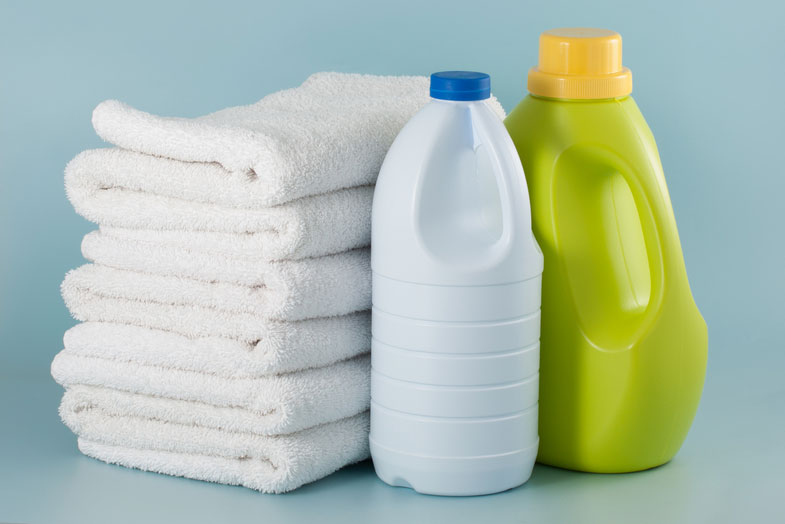
Detergent removes soil and stains. Bleach whitens, brightens and disinfects. You cannot use one in place of the other.
Detergent is essential. You cannot wash clothes well without it. Bleach is optional, and you can skip it unless your whites look dull or you need to disinfect.
Bleach is also stronger and more limited. Chlorine bleach is not color safe, so it is for white, bleach-safe fabrics only, and it can irritate skin and lungs if mishandled. Oxygen bleach is a gentler option that works on most colored clothes, and it also helps with stains and odors.
Detergent is safe on nearly all colors and fabrics. The main exceptions are silk and wool, which can be damaged by enzymes, so use a detergent made for them.
Frequently Asked Questions
Can I use detergent and bleach in the same load?
Yes, as long as the fabric can take bleach and you follow the label. Detergent goes in first, and bleach is added through the bleach dispenser or diluted in the water. Never mix them in a bucket with other cleaners such as ammonia or vinegar.
Is oxygen bleach safer than chlorine bleach?
Oxygen bleach is gentler on fabrics and colors, and it does not release chlorine fumes. It is still a cleaning chemical, so wear gloves, keep it away from children and follow the package directions.
Why do my whites still look dingy after using bleach?
Dinginess often comes from body oils, hard water minerals or too little detergent, not only from stains. Use enough detergent, wash whites separately and in warm water if the label allows, and consider a water softener product if your water is hard.
Does detergent kill germs like bleach does?
Detergent removes most germs along with dirt, but it does not disinfect. Washing in hot water, drying fully on high heat or adding a laundry sanitizer or bleach on suitable fabrics is what actually disinfects clothes.
Conclusion
Detergent and bleach are both useful, but they do different jobs. Use detergent for every wash to clean clothes. Add bleach only when whites need extra brightening or disinfecting, and only on fabrics that can take it. Keep bleach away from other cleaning products.


