

Have you ever wondered why so many of us pour fabric softener into every single wash? For most people it is simply habit, and it is worth asking whether your laundry actually needs it.
No, fabric softeners are not necessary. They do not clean clothes. They coat fibers with a thin lubricating layer that makes fabrics feel softer, reduces static, and adds fragrance. You can skip them without affecting how clean your laundry gets, and in some cases, such as towels and athletic wear, skipping them works better.
Fabric softeners became popular in the mid-20th century, when harsh detergents and hot dryers left clothes stiff and scratchy. Like most laundry products, they have both benefits and drawbacks, and it helps to weigh both before you decide.
Most people use softener for the soft feel and the fresh scent. Fewer people think about the downsides, which is what this guide covers.
Are Fabric Softeners Necessary?
The short answer is no. Fabric softener is a finishing product, not a cleaner. Your clothes get just as clean without it. Whether to use it depends on what you value: a softer feel and a scent, or better absorbency, easier machine care, and fewer added ingredients.
Softeners contain fragrances, preservatives, and softening agents that can irritate sensitive skin in some people and can affect fabrics and machines. Some concerns about softeners are exaggerated, though. For a balanced look, read the answer to the fabric softener toxic myth.
Downsides of Fabric Softeners

Softeners do make rough fabrics feel nicer. But they come with trade-offs you should know about.
Care labels may forbid them. Many labels on performance clothing, moisture-wicking sportswear, and some waterproof gear say not to use fabric softener. Always follow the care label.
They can leave spots and buildup. Liquid softener poured directly onto clothes can leave greasy stains or spots. With repeated use, the waxy coating can build up and make white fabrics look yellowed or dingy.
They can leave residue in your washer. Over time, softener can build up in the dispenser and drum, which can lead to odors and mold. The residue can also transfer onto other loads. Regular cleaning of the dispenser helps.
They can reduce flame resistance. Softeners can reduce the flame resistance of fabrics that are treated to be flame retardant, such as some children’s sleepwear. Check the garment label and avoid softener on these items.
They make towels less absorbent. Towels feel plush after the first few washes, but the coating gradually blocks water from soaking in. Since towels exist to absorb moisture, skip the softener for them.
They are a poor fit for moisture-wicking fabrics. Athletic wear, microfiber, and similar fabrics depend on moving moisture away from your skin. Softener coats the fibers and defeats that purpose. The same goes for leggings, pajamas, and bed linens when you want them to breathe.
They are a questionable choice for baby clothes. Babies have delicate skin, and fragrances and preservatives in softeners can irritate it. Many parents skip softener on baby laundry or choose a fragrance-free version. Never use softener on children’s sleepwear labeled as flame resistant.
Ingredients in Fabric Softeners to Know About
Fabric softeners typically contain softening agents, preservatives to keep the product from spoiling, and fragrances. People with allergies, eczema, or asthma sometimes react to these ingredients, which is why fragrance-free formulas exist.
Here are some ingredients that come up most often in discussions about sensitivity:
Methylisothiazolinone
Methylisothiazolinone (MIT) is a preservative that limits the growth of bacteria and mold in the bottle. It is a known contact allergen, and some people develop itchy rashes or skin reactions after exposure. If you have sensitive skin, check the label for it. For background on bacteria in laundry, see whether bacteria can survive a clothes wash.
People with asthma often report that strong scents trigger symptoms. Read more in Are Fabric Softeners Good for Asthma?
Benzyl Acetate and Benzyl Alcohol
These are common fragrance and solvent ingredients. At high concentrations they can irritate the eyes, skin, and airways. In a diluted laundry product, exposure is low, but people who are sensitive to fragrance may still react.
Limonene and Linalool
Limonene and linalool are scent compounds found naturally in citrus and lavender. They can cause skin allergies in some people, especially when they oxidize. If you react to scented products, choose a fragrance-free option or skip softener.
Where Do You Put Fabric Softener in the Machine?

If you do use softener, where it goes depends on your machine. For detergent placement, see where to put laundry detergent.
Top-Loader With a Dispenser
Most top-loaders with a dispenser have it on the central column or the rim of the tub. Measure the softener using the cap or the dose marked on the label, based on your load size, and pour it in. The machine releases it automatically during the final rinse.
Top-Loader Without a Dispenser
Timing matters here. If you add softener at the start of the wash, the detergent and water wash it away before it can do anything. Add it to the water during the final rinse instead.
Pour it into the water, not directly onto the clothes, to avoid stains. Diluting it in a little water first also helps.
Front-Loader
Front-loaders have a separate compartment in the detergent drawer for fabric softener. It is usually marked with a flower or a star symbol. Do not fill past the max line, because the softener can overflow into the wash too early.
Why People Like Fabric Softener

Softeners are popular for good reasons. They have real benefits, which is why so many people use them regularly.
They Make Fabrics Feel Softer
Softeners lubricate fibers, so rough fabrics feel gentler against your skin. They also reduce friction between fibers, which cuts static cling and can make clothes easier to iron. Less friction can also mean slightly less wear over time.
They Make Clothes Smell Fresh
Fragrance is one of the biggest reasons people reach for softener. Scent is closely tied to mood and memory, and a fresh-smelling load can feel like a reward.
Just keep in mind that the fragrance is a main source of irritation for sensitive people. If you or someone in your home reacts to scented products, a fragrance-free softener or an alternative is the better choice.
What to Use Instead of Fabric Softener
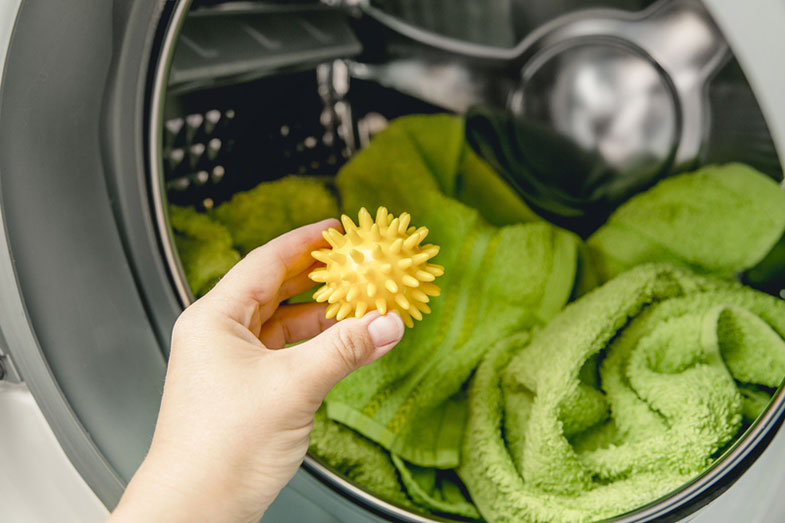
Wool dryer balls are a simple, reusable alternative. They tumble between clothes in the dryer, which helps separate items, speeds up drying, and softens fabrics a little. They do not add fragrance on their own, but you can add a drop or two of essential oil if you like, as long as nobody in the household is sensitive to it.
They last for many loads, so they save money over time and leave no residue on towels or sportswear. Line drying and shaking clothes out before hanging them also helps reduce stiffness.
Softener also coats technical fabrics and can ruin their water repellency, so keep it away from rain gear. Our guide to cleaning waterproof clothing explains what to use instead.
Frequently Asked Questions
Can I use fabric softener on towels?
It is better not to. Softener coats the fibers and makes towels less absorbent over time. If your towels feel stiff, wash them with a little less detergent, and tumble them with wool dryer balls instead.
Does fabric softener make clothes cleaner?
No. It is applied in the rinse and does not remove any dirt or odor. It only changes how the fabric feels and smells, so your detergent still does all of the cleaning.
Is fabric softener safe for sensitive skin?
It depends on the person. Fragrances and preservatives in some softeners irritate sensitive skin, so people with eczema or allergies often avoid them or pick fragrance-free versions. If you notice itching after switching products, stop using the softener and see whether it clears up.
Can fabric softener damage my washing machine?
Using too much can leave a waxy buildup in the dispenser and drum that traps moisture and odors. Measure carefully, never exceed the fill line, and clean the dispenser regularly.
Conclusion
Fabric softeners make clothes feel softer and smell nice, but they are an optional extra, not a requirement. Skip them on towels, athletic wear, baby clothes, and anything whose label says not to use them, and use less in general.
If you do like softener, choose a fragrance-free formula, measure it carefully, and clean your dispenser regularly. If you would rather go without, wool dryer balls are an easy swap. For more on respiratory sensitivity, see fabric softeners and asthma.