

Few laundry products spark as much debate as fabric softener. Some people swear it is full of dangerous chemicals, while others say it is perfectly harmless. As more households look closely at the ingredients in their laundry products, softener sales have been falling, and many people are asking whether the toxic label is deserved.
Fabric softeners are not poisonous when used as directed, but they are not harmless for everyone. They coat fibers with softening compounds and usually contain fragrances and preservatives that can irritate skin or trigger allergies and asthma in sensitive people. If you have eczema, allergies, or asthma, fragrance-free products or natural alternatives are the safer choice.
Below, we separate what is well supported from what is exaggerated, explain how softeners work, and share gentler ways to get soft, fresh-smelling laundry.
How Fabric Softeners Work
Fabric softener is a mixture of softening agents, fragrance, and other ingredients that leave a thin coating on the surface of your clothes. The coating makes fabric feel smoother and reduces static cling. Softeners became popular in the mid-twentieth century, when harsh detergents and hard water left clothes feeling stiff.
Today, many detergents are formulated to clean well without leaving clothes stiff, and some combine a softening ingredient with the detergent. For many households, a separate fabric softener has become optional. Our article on whether fabric softeners are necessary covers this in more detail.
When Fabric Softener Does More Harm Than Good
Aside from the health debate, fabric softener can be a poor choice for certain items. Read the care tags on your sports clothes and you will often see a warning not to use softener. The reason lies in how softener works.
When softener is added during the rinse cycle, it leaves a thin film on the fibers. That film is what makes clothes feel soft.
Athletic fabrics are designed to wick moisture away from your skin so it can evaporate from the outer surface. A softener coating can block those pathways, so the fabric absorbs less sweat and dries more slowly. Over time, odors can become trapped in the fabric, which is why gym clothes sometimes still smell after washing.
Softener can also reduce the absorbency of towels, and it can affect the flame resistance of fabrics treated to resist fire, such as some children’s sleepwear. Always follow the care label.
Are Fabric Softeners Safe?

Because softeners work by leaving a layer on your clothes, whatever is in that layer stays in contact with your skin all day. That is the main reason for concern. For most people, the exposure is low and causes no problems. For people with sensitive skin, allergies, or asthma, certain ingredients can cause reactions.
Manufacturers are not always required to list every fragrance component on the label, so it can be hard to know exactly what you are using. The ingredients most often linked to irritation or sensitivity are quaternary ammonium compounds, fragrances, and preservatives.
Here is a summary of the ingredient groups people most often ask about, and the concern attached to each.
- Quats (quaternary ammonium compounds): the softening agents. Some people find them irritating to the skin.
- Fragrance ingredients such as limonene and linalool: common triggers of contact allergy, especially when they oxidize.
- Preservatives such as methylisothiazolinone: a known skin allergen.
- Formaldehyde-releasing preservatives such as DMDM hydantoin: a possible cause of skin allergy.
- Solvents and alcohols: in strong concentrations they can irritate the airways, but the amounts in a bottle of softener are small.
Keep in mind that a hazard listed for a chemical in its pure form does not automatically apply to the tiny amounts in a rinse. The dose and the route of exposure matter. Still, if you notice itching, a rash, sneezing, or breathing trouble after using softener, stop using it.
Read More: Are Fabric Softeners Good for Asthma?
Ingredients to Know in Fabric Softeners
Laundry products are made from many synthetic ingredients, and companies add fragrances and other components to make them more appealing. Let us look at the main groups so you can read a label with confidence and understand how each can affect your skin or breathing.
Solvents and Alcohols
Some softeners contain small amounts of solvents such as ethyl alcohol or benzyl alcohol to keep ingredients mixed and carry fragrance. In their pure or concentrated form, these substances can irritate the eyes, nose, and throat, and swallowing them is dangerous. In a diluted softener, the amounts are small, but people with sensitive airways may still notice the smell.
This is one reason you should never let children or pets drink or play with softener. Keep the bottle capped and stored out of reach, and rinse your skin with water if you spill it.
Fragrances
Fragrance is added to make laundry smell fresh, and the use of scent in household products has grown over the past few decades. Fragrance is one of the most common causes of contact allergy to cosmetics and household products.
Synthetic musks and phthalates have been used as fragrance carriers in some products, and they remain a topic of debate among researchers. Skin irritation, dermatitis, and allergic reactions are the most commonly reported problems.
If you have a scent allergy or asthma, it is best to avoid scented fabric softeners. Fragrance-free and dye-free versions are available, and they are a far better option for sensitive people. For more guidance, see our laundry detergent guide for allergy sufferers.
Preservatives and Dyes
Liquid products need preservatives so that bacteria and mold cannot grow in the bottle.
Some preservatives, including methylisothiazolinone and formaldehyde-releasing agents such as DMDM hydantoin, are recognized skin allergens. Allergic contact dermatitis from preservatives can show up as itchy red patches where clothing touches the skin.
Methylisothiazolinone is widely used as a preservative in many household products, and it has been identified as a common cause of allergic skin reactions.
Glutaral (glutaraldehyde) is another preservative that can irritate the skin and airways, and it is harmful to aquatic life in higher concentrations.
Since softener stays on the fabric, your skin is in contact with whatever remains after rinsing. That is why people who react to these ingredients usually notice the problem on areas where clothes fit tightly or rub, such as the neck, underarms, and waistband.
Quats
The ingredients that create the softening effect are called quats, short for quaternary ammonium compounds. Common examples in softeners include esterquats and distearyldimonium chloride.
Some quats, especially the disinfectant types used in cleaning products, have been linked to asthma and skin irritation in people who work with them heavily. The softening quats used in laundry products are different, and the evidence about their effects at household levels is limited. Still, some people with asthma or sensitive skin report symptoms after using them.
Some quats also have germ-killing properties. That is not needed in a fabric softener, since your detergent and wash temperature already do the cleaning, and scientists continue to study whether widespread use of disinfecting quats could contribute to bacterial resistance.
If you or your child has asthma, eczema, or very sensitive skin, a fragrance-free product or an alternative is the safest approach. Talk to your doctor if you notice symptoms.
Read More: Are Fabric Softeners Necessary?
Alternatives to Fabric Softeners
Several inexpensive options can soften your laundry without a commercial softener. Dryer sheets are left off this list because they work in a similar way to liquid softener: they transfer a coating and often contain fragrance. Here are some alternatives to try.
Water Softener
Hard water is a common problem. Minerals in hard water can leave clothes feeling rough and stiff, and they can make colors look dull. Detergent also does not rinse out as well in hard water.
A whole-house water softener removes the minerals that cause hardness. With softer water, detergent dissolves and rinses out more easily, and clothes feel softer without extra products. If a water softener is out of your budget, a detergent made for hard water can help.
Softer water can reduce your need for fabric softener, which means fewer additives on your skin.

Baking Soda
Baking soda helps condition the wash water. Add about half a cup to the drum with the clothes at the start of the wash. It raises the water’s alkalinity, which helps detergent work better and can leave clothes feeling softer and fresher. Do not use baking soda in the same step as vinegar, since the two neutralize each other.
White Vinegar
Distilled white vinegar is a popular natural softener. Add about half a cup to the fabric softener compartment for the rinse cycle. It helps dissolve leftover detergent, and the vinegar smell disappears as the clothes dry. This makes it a good choice for people who dislike scented products.
Use it in moderation, and check your washer’s manual, since frequent heavy use may wear down rubber parts in some machines. Never mix vinegar with bleach or any product containing bleach, because it releases toxic chlorine gas.
Dryer Balls
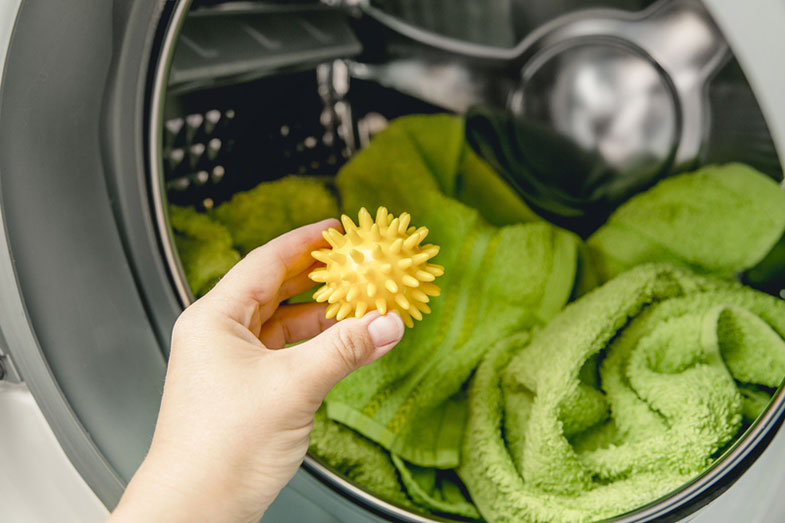
Dryer balls are a reusable alternative to dryer sheets and liquid softener. They are usually made of wool and are tossed in the dryer with your clothes. As they tumble, they separate the laundry, let hot air circulate, and help soften fabrics and reduce wrinkles.
Wool dryer balls contain no added chemicals. Because they help the load dry faster, they can also cut drying time a little, which saves energy. They last for many loads, so they cost less over time than buying softener.
Conclusion
Fabric softeners are not deadly, but they are not necessary, and they can cause problems for people with sensitive skin, allergies, or asthma. The quats, fragrances, preservatives, and dyes they contain are the ingredients most likely to cause a reaction.
Softeners also affect the environment, as some ingredients are harmful to aquatic life when they reach waterways in large amounts. To learn how to choose better products, see what makes laundry detergent eco-friendly. And the cost of buying softener adds up over time.
Plenty of alternatives can soften your clothes, reduce wrinkles, and save you money. If you decide to keep using softener, choose a fragrance-free formula and use only the amount on the label. Tell us in the comments which method works best for you.