
Every household contributes to pollution in small ways, and laundry is one of them. Detergent goes down the drain after every wash, and the choices we make, from the formula to the packaging to the water temperature, add up over time.
You can make a real difference by choosing greener products and using them wisely. Here is what to look for in an eco-friendly detergent.
An eco-friendly laundry detergent uses biodegradable, plant-based or low-impact ingredients, avoids phosphates and other problem additives, works well in cold water, comes in a concentrated formula, and ships in recyclable or minimal packaging. Third-party eco labels and a full ingredient list help you confirm that the claims are real.
Choosing a greener detergent is one simple step toward a lighter footprint. Let us look at what is in a typical detergent, what makes a product more eco-friendly, and which habits matter just as much as the product you buy.
What Is Wrong With Conventional Laundry Detergent?
Conventional detergents work well, but some of their ingredients and packaging raise concerns. Start with the formula. Detergents contain surfactants, which reduce the surface tension of water so dirt can lift off fabric. Sodium lauryl sulfate (SLS) is a common surfactant found in many laundry and personal care products.
Surfactants are not all the same. Some can irritate sensitive skin, and some break down in the environment more easily than others. That is why it is worth reading the label before you buy. You can learn more in our guide to anionic surfactants.
Some ingredients can also harm water life when large amounts reach rivers and lakes. Wastewater treatment removes much of what goes down the drain, but not everything, and certain detergent ingredients can affect fish and other aquatic organisms. For a deeper look, read how laundry detergent affects the environment.
The other issue is packaging. Most liquid detergents come in plastic jugs. Many of those jugs are recyclable where facilities exist, but a lot of plastic never gets recycled, and a heavy, water-rich liquid takes more energy to ship. Less packaging is better.
Read More: Are Liquid Detergents Better than Powder?
How Do I Choose an Eco-Friendly Laundry Detergent?
Once you know what matters, choosing is easier. Words like “green” and “natural” are not regulated, so look beyond the front label. Check for the following qualities.
It Saves Energy
Look for a detergent that dissolves and cleans well in cold water, around 86 degrees Fahrenheit (30 degrees Celsius) or lower. Most of the energy used in laundry goes to heating water, so a formula that works in cooler water saves energy and money.
It Is Concentrated
Concentrated formulas pack more cleaning power into a smaller container, which means less packaging and less energy spent on transport. Some “concentrated” products are still fairly watery, so compare the number of loads per bottle rather than the bottle size.
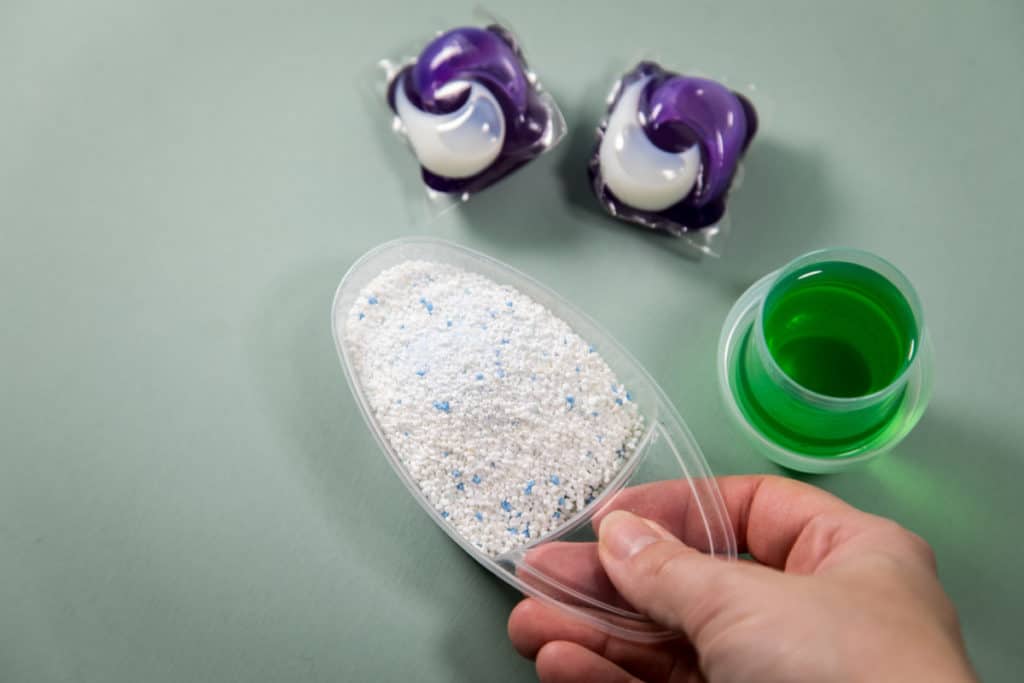
Powders, sheets, and detergent bars are other low-water options.
It Uses Minimal or Recyclable Packaging
Cardboard boxes and refill packs create less plastic waste. If you buy liquid, choose a bottle made with recycled plastic that you can recycle again where you live. Check your local recycling rules.
It Is Gentle on Skin
Many people react to dyes and fragrances in laundry products. A fragrance-free or hypoallergenic detergent is a good pick if you have sensitive skin. Our guide for allergy sufferers and our article on unscented detergent powder can help.
It Is Affordable Over Time
Green products do not have to cost a fortune. Concentrates and bulk refills often cost less per load, so compare the price per wash instead of the sticker price.
It Is Safer for the Environment
Look for ingredients that are readily biodegradable and a brand that publishes its full ingredient list. Independent labels, such as the EPA Safer Choice label in the United States, can help confirm that a product meets specific standards.
Read More: Soaking Clothes in Detergent: What You Need to Know
What to Avoid in Laundry Detergent
Chlorine Bleach
Chlorine bleach (sodium hypochlorite) is a strong disinfectant, but it can irritate skin, eyes, and lungs, and it releases dangerous fumes if it is mixed with other cleaners such as ammonia or vinegar. It also is not a typical ingredient in green detergents. Oxygen-based bleach is a milder alternative.
Phosphates
Phosphates can feed algae in lakes and rivers, a process called eutrophication that can starve water of oxygen. Many places have restricted or banned phosphates in laundry detergent, but it is still smart to check the label.
Harsh Surfactants
Sodium lauryl sulfate (SLS) is a well-known skin irritant for some people. If you have sensitive skin, look for products with milder surfactants, such as sodium laureth sulfate (SLES) or plant-derived options, and check how the brand describes them.
Methylisothiazolinone
Methylisothiazolinone is a preservative that can cause allergic skin reactions in some people. It also appears in some products marketed as “natural.” If you have sensitive skin, look at the ingredient list for it and choose a different product.
Optical Brighteners
Optical brighteners are added to make whites look brighter. They stay on the fabric and some of them break down slowly in the environment, and they can irritate skin for some people. Many eco-friendly brands leave them out.
Synthetic Fragrances
Fragrance lingers on clothes long after the wash, and it is one of the most common causes of skin reactions to laundry products. Synthetic fragrance blends do not have to list every component on the label.
Choose a fragrance-free detergent, or one scented with natural essential oils. Keep in mind that essential oils can also trigger reactions in some people.
You can also research whether a brand tests on animals and look for certifications that address it. Whatever you choose, favor recyclable packaging and, for liquids, a concentrated formula.
Read More: Laundry Detergent: Before or After Clothes?
Use Cold Water
Heating water takes a lot of energy, and most of the energy in a wash cycle goes into warming the water. Modern detergents are designed to work well in cold water for everyday loads, and cold water is gentler on colors too.
Save warm or hot cycles for heavily soiled loads, bedding, and anything the care label says needs it.
Use Less Detergent
Many people use more detergent than they need. If you see a lot of suds in the machine, you probably used too much. Mark the measuring cup with lines for small, medium, and large loads, and do not go above the amount recommended on the label.
Less detergent means less product to rinse down the drain, lower cost, and less residue left on your clothes.
Why Should I Use Eco-Friendly Detergent?

Conventional detergents are cheap, smell nice, and clean well, so why switch? Because the effects of what we wash down the drain are not always visible, but they accumulate.
Choosing a greener product means choosing fewer problem ingredients, less waste, and fewer resources used. Here is what a good eco-friendly detergent should offer.
It Should Be Gentler on Waterways
Some detergent ingredients can harm aquatic life when they reach rivers and lakes. Wastewater plants remove much of it, but they cannot remove everything. Choosing ingredients that break down readily helps reduce this impact.
It Should Be Kinder to Your Skin
If you have never had a reaction, that does not mean the problem does not exist for others. Laundry products are a known cause of skin irritation and allergic reactions for some people. Leaving out phosphates, strong fragrances, and irritating ingredients makes a detergent a better fit for sensitive households.
It Should Use Fewer Resources
A detergent that dissolves in cool water, ships in concentrated form, and comes in lighter packaging saves energy and cuts waste.
Simple Habits That Help Even More
The detergent you pick is only part of the picture. Washing full loads, skipping extra rinse cycles you do not need, and line-drying when you can all reduce water and energy use. Fix leaks and maintain your washer so it keeps running efficiently, and wash less often when clothes are not really dirty.
Conclusion
An eco-friendly detergent has a gentler ingredient list, cleans well in cold water, comes in a concentrated formula, and uses minimal or recyclable packaging. Read the whole label, not just the front, and look for independent certifications.
How you wash matters too. Use cold water, measure your detergent, and wash full loads. The goal is clean clothes with the smallest footprint you can manage.