

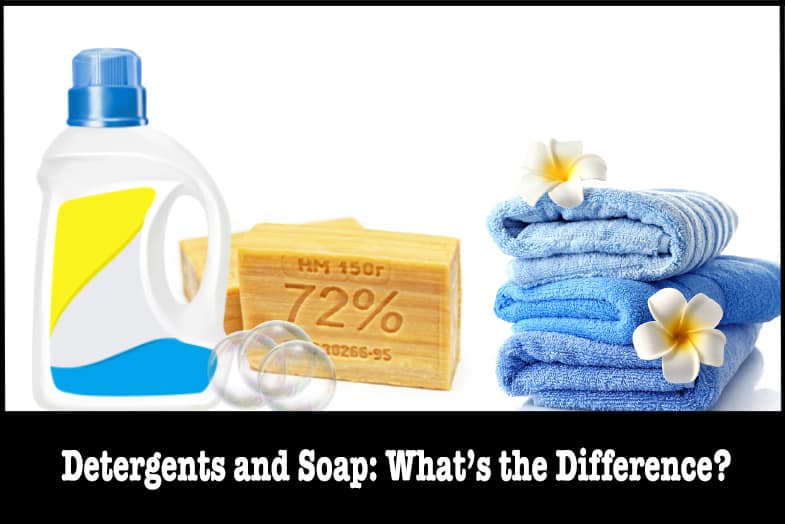
People often use the words detergent and soap as if they mean the same thing. They are related, but they are not identical, and the difference matters when you do laundry.
Soap is made from natural fats or oils combined with an alkali, while detergent is made from synthetic cleaning agents called surfactants. Both lift away dirt and grease. The key difference is that soap reacts with minerals in hard water and leaves scum, while detergent keeps working, so detergent is usually better for laundry.
Soap and detergent do the same basic job, but they are built from different ingredients. This article explains what each one is, how each works, and which one to choose for your laundry.
What Is Soap?
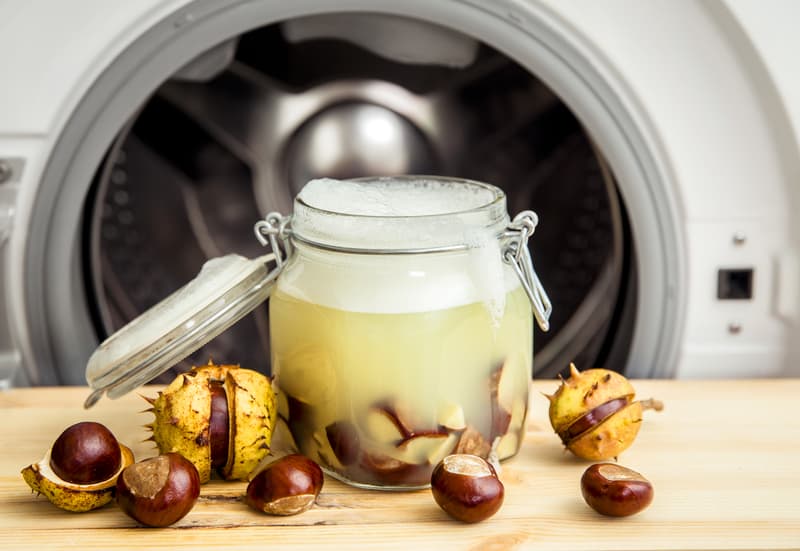
Soap is made by combining fats or oils with an alkali such as lye, a reaction called saponification. The result is soap and glycerin. Finished soap bars and liquids may also contain water, salt, and other additives, depending on the product.
People have used soap for thousands of years to clean skin, hair, and fabric, and it was once used in medicine and cosmetics as well. Today it is used mostly for cleaning the body, and sometimes for clothes. If you want to try laundry soap, see our guides to laundry soap bars and how to use them.
How Soap Is Made
Commercially, soap is made by two main methods: the kettle process and the continuous process. The kettle process makes one batch at a time, so it is slower and less common for large producers.
The Kettle Process
In this process, fats and alkali are heated together in a large tank called a kettle. As the mixture boils, it thickens and turns into soap and glycerin. To separate the two, the maker adds salt. The soap rises to the top, and the glycerin settles at the bottom.
The soap is then washed with water and heated again to purify it, and the top layer is separated and cooled into finished soap.
How Does Soap Work?
Soap molecules have two ends. One end is hydrophobic, which means it repels water and attaches to oil and grease. The other end is hydrophilic, which means it is attracted to water. When you wash, the oil-loving ends grab dirt and grease while the water-loving ends stay in the water. Rinsing carries the dirt away.
Traditional soap is made from natural ingredients and is biodegradable. Its main drawback in laundry is hard water. Soap reacts with calcium and magnesium minerals in the water and forms a sticky scum that can leave a gray film on clothes.
You can buy soap or make it at home. Home soap makers usually use the cold process or the hot process, which are small-batch versions of the same reaction.
Soap Ingredients
Soap fat can come from animals, such as beef tallow, or from plants. Tallow is inexpensive and makes a hard, long-lasting bar. Plant oils, such as coconut, olive, and castor oil, are popular for softer, more lathering bars.
Well-made soap often keeps its natural glycerin, which is gentle on skin. The quality of a bar depends on the recipe and how carefully it is made, not only on the fat that goes into it.
What Is Detergent?
Detergent is a cleaning product built on synthetic surfactants (surface-active agents), usually made from petrochemical or plant-based raw materials. Many laundry detergents also contain builders that soften water, and some older formulas used phosphates for this purpose. Because phosphates can harm lakes and rivers, many countries and U.S. states have restricted them in laundry products.
Detergents are used for many jobs. You can find formulas for laundry, dishes, floors, cars, and more, each designed for its own purpose.
Beyond surfactants, laundry detergents often include bleach or bleach alternatives to keep whites bright, and enzymes that break down stains. Learn more about stain removal in our article on mysterious blue stains on washed clothes.
Many also contain fragrances, dyes, fillers, and optical brighteners, which make clothes look brighter and smell fresh.
Read more: Laundry Detergent: Before or After Clothes?
How Detergent Is Made
Manufacturing begins with selecting raw materials based on the type of product and how it will be used. Makers produce the surfactants first. For example, a fatty acid or petrochemical raw material is converted into a surfactant through a chemical reaction.
That surfactant base is blended with water, builders, preservatives, and fragrance. The mixture is then cooled, and heat-sensitive ingredients, such as enzymes, are added last so they are not damaged. The finished product is made into liquid, powder, or pods.
How Does Detergent Work?
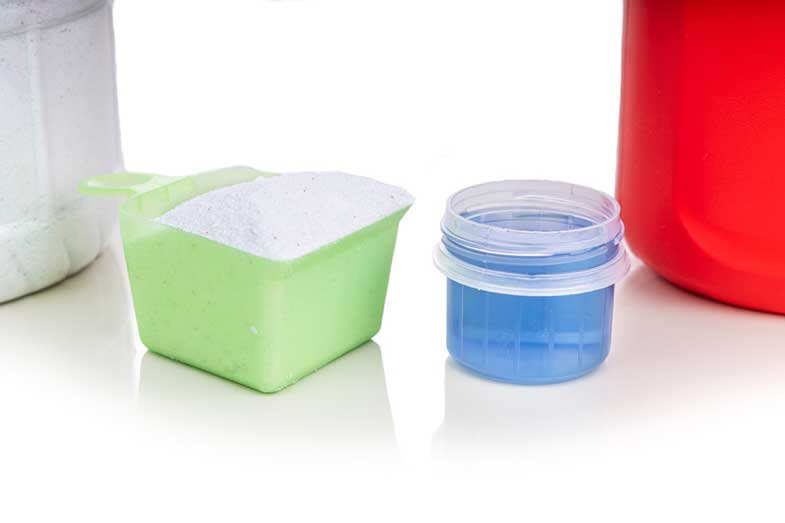
Detergent works much like soap. Its molecules also have a water-loving end and an oil-loving end, so they surround dirt and grease and lift them off fabric. The water then carries the loosened soil away.
Surfactants also lower the surface tension of water, which helps it penetrate fabric and reach dirt. Unlike soap, most detergent surfactants do not react with hard water minerals, so they keep cleaning where soap would form scum.
Detergent comes as a liquid, powder, or pod. For help choosing, see liquid vs. powder vs. pod detergent.
Detergent Ingredients
Surfactants are the main active ingredient. Foaming agents and sometimes solvents such as alcohol support the cleaning process. Fragrances cover the chemical smell of the base ingredients and leave clothes smelling fresh.
Preservatives keep liquid detergents from spoiling on the shelf. In some people, preservatives and fragrances can cause skin irritation or allergies, so choose a fragrance-free formula if you have sensitive skin.
Enzymes are also common, and each type targets a particular kind of stain. For example, protease breaks down protein stains such as blood or grass, while amylase targets starches and lipase targets fats.
Read more: Can Your Detergent Impact Your Acne and Skin?
Soap vs. Detergent: What Is the Difference?
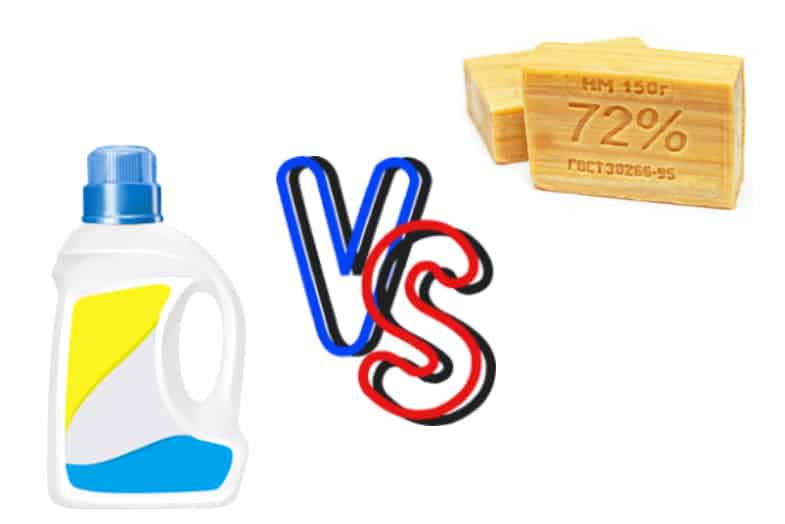
The main difference is the ingredients. Soap is made from fats or oils and an alkali. Detergent is made from synthetic surfactants and a mix of other cleaning ingredients.
| Feature | Soap | Detergent |
|---|---|---|
| Main ingredients | Fats or oils plus alkali | Synthetic surfactants plus builders and enzymes |
| Hard water | Forms scum and can leave a gray film | Works well in hard water |
| Stain removal | Limited | Stronger, thanks to enzymes and bleach options |
| Forms | Bars, flakes, liquids | Liquids, powders, pods |
| Typical use | Body, hands, some laundry | Laundry, dishes, and household cleaning |
Soap is generally considered easily biodegradable. Most modern detergent surfactants are also designed to biodegrade, although some other ingredients, such as phosphates, can still harm waterways. Which one costs more depends on the brand, but laundry detergent is usually the better value for everyday washing.
Which One Is Better for Laundry?
For most households, detergent is the better choice for laundry. It contains surfactants, enzymes, and often bleach alternatives and brighteners that remove stains and keep clothes looking bright. Soap lacks most of these ingredients, so it does not remove stains as well.
Hard water is the other big problem. Soap forms scum in hard water, which can leave spots and a dull gray film on clothes that is hard to remove.
Detergent has drawbacks too. Fragrances and preservatives can irritate sensitive skin, and some ingredients affect waterways if you use too much. A good middle path is an eco-friendly laundry detergent, which uses plant-based ingredients and avoids phosphates.
Frequently Asked Questions
Can I wash clothes with bar soap?
You can, especially for hand washing small items or spot treating, but it works best in soft water. In hard water it can leave a gray film. Detergent is the easier choice for machine loads.
Is detergent bad for my skin?
Most people tolerate detergent well, but fragrances, dyes, and preservatives can bother sensitive skin. Choosing a fragrance-free formula and adding an extra rinse usually helps.
Why does soap leave a film in hard water?
Hard water is rich in calcium and magnesium. These minerals react with soap molecules and form an insoluble scum that sticks to fabric and the washer. Detergent surfactants are designed to stay soluble, so they do not do this.
Which is more eco-friendly, soap or detergent?
Both can be low impact when you use the right amount. Soap is made from natural fats and biodegrades easily, but detergent can work at lower temperatures and lower doses. Look for plant-based, phosphate-free detergents for a good balance.
Conclusion
Soap and detergent both clean using the same basic principle, and the difference lies mostly in the ingredients. Soap is made from fats and alkali, while detergent uses synthetic surfactants and additives.
Because soap reacts with minerals in hard water and lacks stain-fighting ingredients, detergent is usually the better option for laundry. Whichever you choose, use the amount recommended on the label, and consider an eco-friendly detergent to reduce your impact on the environment.


