

Laundry is one of the most time-consuming chores, and we all wish our clothes would just stay clean. They do not, so we have to wash them. The good news is that a few simple habits can make the job quicker and the results much better.
The most important do’s and don’ts for powder laundry detergent are to measure the right amount with a scoop, add it to the water or the correct dispenser before the clothes, sort by color and fabric, and not overload the machine. Never leave powder sitting on top of clothes or mix it with bleach, and always store it dry and out of children’s reach.
Many laundry disasters come from small mistakes: too much detergent, a crowded drum, or a forgotten tissue in a pocket. Below are the tips that help you avoid those problems and do laundry quickly and like a professional.
About Powder Laundry Detergent
Powder detergents are a popular option because they are usually cheaper than other forms. They are lightweight and are often sold in cardboard boxes, which many people find easier to recycle than plastic jugs.
Powder detergents are good at removing dry, dirty stains such as mud and grass. Many powders also contain oxygen-based bleaching agents that brighten whites, and these can fade some colored fabrics if the product is not labeled color-safe. Check the box before you use it on bright or dark clothes.
The main downside is that powder can leave residue if it does not dissolve completely in the water. Residue can show up as white marks on dark clothes. Over time, it can also build up inside parts of the washing machine and the drain. Using the correct amount and the right water temperature helps avoid this. If you want to compare formulas, see our guide to liquid, powder, and pod detergent.
Tips for Using Powder Laundry Detergent
Small details in how you use and store detergent make a big difference. Many people overlook the safety risks of storing and handling detergent. Here are the tips to follow before you start your next load.
Do: Read the Care Labels on Your Clothes

Some detergents can fade colors or damage certain fabrics, and some garments should not be machine washed at all. Read the care label on each item before it goes into the washer. It tells you the maximum water temperature, the right cycle, and whether the item can be washed at home.
Do: Sort Your Clothes
After reading the labels, sort your clothes by color and weight. Keep whites separate from colors, and keep bright colors apart from dark ones. Also check new garments for color bleeding before you mix them with other items.
Light colors include grays, pastels, and light prints. Dark colors include black, navy, jeans, red, and other bright shades. Wash delicates separately, preferably in a mesh bag.
Do: Store Detergent in a Cool, Dry Place
Powder detergent absorbs moisture and turns into hard clumps, so keep it somewhere cool and dry. Avoid storing it in the bathroom, even if your washer is in there, because the humid air is bad for powder.
A dry cabinet or a shelf in a laundry room works well, even in a small apartment. Keep the box tightly closed, or pour the powder into an airtight container to keep the air and moisture out. For more advice, read our guide on the best way to store laundry detergent.
Do: Read the Packaging Instructions
The detergent package lists directions and warnings, usually on the back. Most brands include a clear chart showing how much detergent to use depending on the load size, how dirty the clothes are, and how hard your water is. They often suggest a water temperature as well.
Take a minute to read the directions and warnings the first time you open a new product.
Do: Choose a Good-Quality Powder Detergent
Choose a detergent that suits your needs and keep it in your laundry room. Products differ from brand to brand, and some are formulated for specific purposes such as sensitive skin, whites, or high-efficiency machines.
Pretreating stains can be harder with powder than with liquid. You can solve that by mixing a little powder with water to make a paste, spreading it on the stain, and letting it sit for a few minutes before washing.
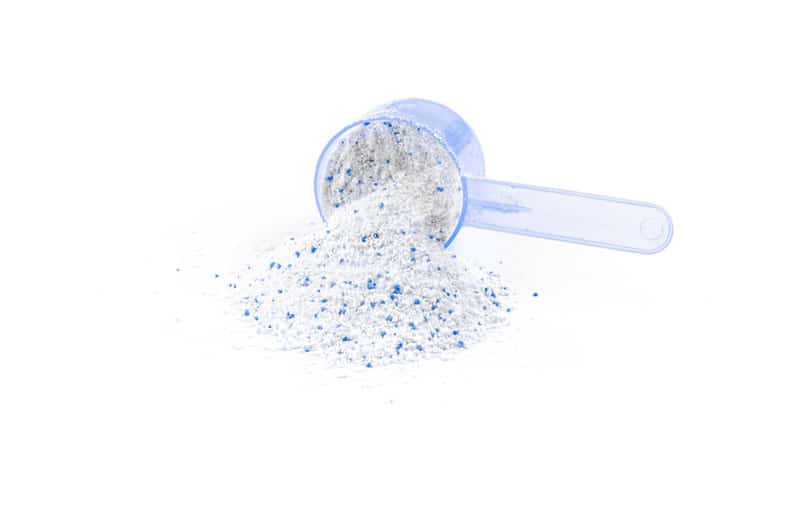
Do: Measure with a Powder Scoop
Using the wrong amount of detergent causes problems. Too much powder leaves residue on clothes and inside the machine, and it creates extra suds.
Too many suds can overflow, and they make the washer work harder. High-efficiency machines are especially sensitive to oversudsing, which can trigger error codes or longer cycles. Use the scoop that comes in the box, or buy a measuring scoop, and follow the dose on the label. Our article on dosing devices explains more.
Do: Use the Right Compartment
Front-loading and high-efficiency machines have a dispenser drawer with separate compartments for different products. These are usually marked for detergent, fabric softener, and sometimes bleach. Many drawers have separate sections for the main wash and the prewash.
Measure the powder and pour it into the main wash compartment. Machines are designed to release detergent into the drum at the right time, so use the drawer instead of throwing powder directly into the drum, unless your manual says otherwise.
Read More: Where Do I Put Laundry Detergent? (Front-Loader/Top-Loader)
Do: Keep Detergent Away from Children

Most detergent packages carry a warning to keep the product away from children, and the warning is serious. Laundry detergent is not food, and swallowing it can irritate the mouth and stomach. Powder can also cause choking or breathing problems if it is inhaled or swallowed, and powder in the eyes causes irritation.
Store your detergent on a high shelf or in a cabinet with a childproof lock. If a child swallows detergent or gets it in the eyes, contact Poison Control (1-800-222-1222 in the United States) or emergency services right away.
Do: Add the Powder Before the Clothes
A top-loading machine usually has no dispenser for powder, so you add it directly to the drum. Add the powder as the drum fills with water, and put the clothes in afterward.
This helps the powder dissolve fully in the water and reduces the risk of spots or streaks on the clothes. The same tip applies to liquid detergent, as we explain in our guide on adding laundry detergent before or after clothes.
Read More: What Are the Benefits of Unscented Detergent Powder?
Do: Use the Correct Water Temperature
Not every item can be washed in hot water, so always check the care label first. If the label allows it, hot water is a good choice for sturdy white items, towels, and heavily soiled or greasy laundry.
Cold or cool water is better for dark clothes and for items that tend to bleed color or fade. Cold water also makes powder harder to dissolve, so for cold washes, stir the powder in the water first or choose a detergent designed for cold water.
Don’t: Pour Powder on Top of the Clothes
When powder lands on top of the clothes, it can sit there undissolved and leave spots or streaks. It also does not mix into the water properly, so the clothes do not get as clean.
Instead, add the powder to the water first or to the dispenser drawer, and then load the clothes.
Don’t: Overload the Washing Machine
No matter how much detergent you use, an overloaded washer will not clean well. Clothes need room to move around in the drum so water and detergent can reach every item.
When the machine is too full, clothes come out dirty or covered in residue. Aim for a medium load, and use the amount of detergent recommended for that load size.
Don’t: Wash Colors and Whites Together
Sort clothes by color and by how delicate they are. Wash delicates and undergarments separately from the rest of your clothes. Lights can be washed together, and so can darks.
Sort by weight, too. Heavy garments such as coats and blazers should be washed apart from lightweight clothes, which can be damaged by the heavier items.
Don’t: Leave Clothes in the Washer After the Cycle
Take clothes out as soon as the cycle ends. Even if you sorted by color, damp clothes left together can still transfer dye and can start to smell musty.
Don’t: Leave Zippers Open or Pockets Full
Close the zippers on jeans, jackets, and other garments before washing. Open zippers can snag delicates and damage the drum. Also check every pocket. A tissue left in a pocket can shred and cover your whole load in lint.
Don’t: Use Bleach on Colored Clothes
Regular chlorine bleach should only be used on white fabrics that the care label says can be bleached. Even a few drops can strip the color from colored clothes. If you want to brighten colors, choose a color-safe oxygen bleach and follow the directions on the label.
Never mix bleach with detergent boosters, vinegar, ammonia, or other cleaning products, because this can create dangerous fumes. If you want to know more, read about the difference between laundry detergent and bleach.
Frequently Asked Questions
How much powder detergent should I use?
Follow the dosing chart on the package. The amount depends on your load size, how dirty the clothes are, and your water hardness. Use the scoop that comes in the box, and use less in high-efficiency machines unless the label says otherwise.
Why does powder detergent leave white marks on clothes?
The powder usually did not dissolve fully. This happens with cold water, overloaded machines, or too much detergent. Use the recommended amount, avoid overfilling the drum, and add the powder to the water before the clothes. You can also dissolve it in a cup of warm water first.
Can I use powder detergent in a high-efficiency washer?
Yes, if the box is labeled HE-compatible. Standard formulas can create too many suds in high-efficiency machines, so always check the label.
Can I put powder detergent in the fabric softener compartment?
No. Use the compartment marked for detergent or main wash. Powder in the softener compartment can clog the dispenser and will not release at the right time.
Conclusion
Powder detergent is easy to use and often more affordable than other types. It works best when you measure carefully, dissolve it well, and store it dry. Keep it in an airtight container, since a cardboard box does not protect against moisture, and keep it out of children’s reach.
From measuring the detergent to sorting your clothes and choosing the right water temperature, these tips should cover the most common questions. Follow them, and you will get cleaner clothes with less effort.