A good laundry bar costs little and sits in a drawer for months, but it does not work equally well on every stain. Some marks, like grease and collar grime, are exactly what soap was made for. Others, like blood and grass, need more than a bar, and rubbing the wrong way can make them worse.
This guide answers the question behind “best bar soap for stains” by stain type. We name well-regarded bars as options, not test winners, and explain why soap helps or does not help on each stain.
The best bar soap for stains depends on the stain. Oil-based marks such as grease, collar grime and makeup respond well to a laundry bar because soap lifts fats. Protein and plant stains such as blood and grass respond less well: treat them with cold water first, then an enzyme product. Well-known bar options include Fels-Naptha and Zote.
Below you will find the stains organized from the easiest for soap to the hardest, the pre-treating method that works with any bar, and what to reach for when a bar is not enough. For general bar handling, see our guide to how to use laundry soap bars.
Why Soap Works on Some Stains and Not Others
Soap molecules have an oil-loving end and a water-loving end. That structure lets them surround greasy soil and carry it away in the rinse water. This is the same basic job that detergents do, though soap is harder to rinse out.
Fat-Based Stains
Cooking oil, body oil, butter, lipstick and foundation are fat-based. A bar delivers soap right onto them in concentrated form, which is why bars have such a long reputation for greasy marks.
Protein and Plant Stains
Blood, egg, milk and grass contain proteins. Soap alone does not break proteins apart. Enzymes do, which is why stain guides recommend enzyme products for them. The American Cleaning Institute’s stain removal guide says to pretreat or soak dried stains in warm water with a product containing enzymes and to deal with stains as early as possible.
Hard Water
Soap and hard water combine into a whitish scum, as soap maker Dr. Bronner’s explains on its hard water page. A bar used on a spot and then washed out with detergent is usually fine, but extra bar soap in the drum can leave film in hard-water areas.
Which Bars to Consider
These are options that many readers know, not winners of a test on this site. Check each wrapper, since formulas and scents change.
Fels-Naptha
Made by Summit Brands, it is marketed as a stain remover bar for grease, oil, sweat, blood, wine and grass, with directions to wet the stain, rub the bar on it, wait a minute and wash. See the manufacturer’s product page.
Zote
Made by Fábrica de Jabón La Corona, it is a large tallow and coconut soap sold in pink, white and blue. The maker recommends it for pre-washing collars, cuffs and difficult stains.
Coconut-Oil Castile-Style Bars
Some people use plain coconut-oil castile bars on spots. These are usually sold as personal soaps, not stain removers, so check the wrapper for the ingredient list and any fragrance. Test on a hidden spot first and expect less stain-specific help than from a bar sold for laundry.
For a wider selection, our in-depth laundry soap bar review compares more options.
Best Approach by Stain Type
| Stain | Does soap work? | What to do |
|---|---|---|
| Grease and cooking oil | Yes, usually well | Blot, rub bar on, wait, wash warm |
| Collar and sweat grime | Yes | Wet, rub bar, brush gently, wash |
| Makeup (foundation, lipstick) | Good on the oily base | Lift excess, rub bar, rinse from the back |
| Grass | Partly | Bar plus enzyme product |
| Blood | Partly | Cold water first, then enzyme product |
Grease and Cooking Oil
Grease is where bars do best. Remove surplus with a spoon or blot with a paper towel. Maytag’s guide to grease stains advises rubbing detergent in, letting it sit for about ten minutes, then washing in the warmest water the label allows. A bar works the same way. Wet the spot, rub the bar in, wait ten minutes and wash.
If a shadow remains after washing, repeat before you put the item in the dryer. Heat sets oil stains.
Collar and Sweat Grime
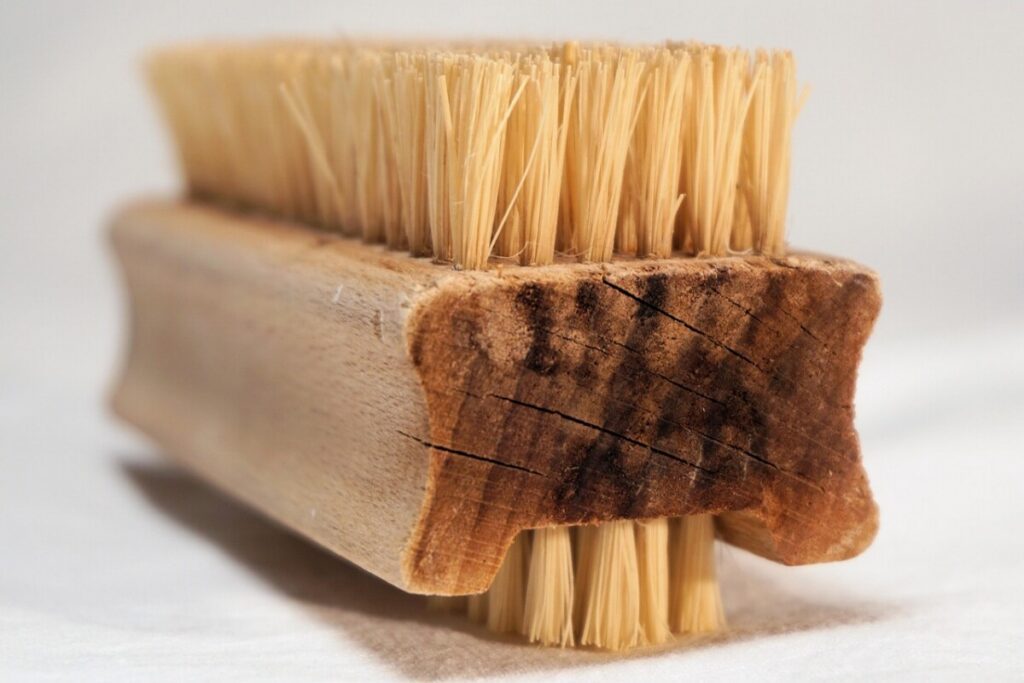
Collar rings are body oil mixed with dirt, so soap suits them. Wet the collar, rub the bar along the ring, and work it in with a soft brush or old toothbrush. Give it several minutes, then wash. Yellowing from sweat on whites can need an oxygen bleach after the bar. Use the oxygen bleach only on colorfast, bleach-safe fabrics, and read our comparison of detergent and bleach first.
Grass
Grass has plant pigment plus proteins. A bar can loosen part of it, but enzyme products usually do better. Rub the bar on the stain, wait a few minutes, then add an enzyme pre-treater or soak, following its directions, before washing.
Blood
Use cold water. Hot water can set blood stains, according to common stain guidance. Flush from the back of the fabric with cold water, then work in soap, or soak with an enzyme detergent for the time its label gives. A bar can help as the soap step, but it is not the main tool.
Makeup
Foundation and lipstick contain oils and waxes, so a bar helps with the greasy base. Lift off surplus without rubbing it in, wet the spot, rub the bar on and rinse from the back. Pigment can remain after the oil is gone. Repeat the bar and, if the fabric is colorfast, try an oxygen bleach soak. Let it air-dry until the mark is clearly gone.
The Pre-Treating Method That Works With Any Bar
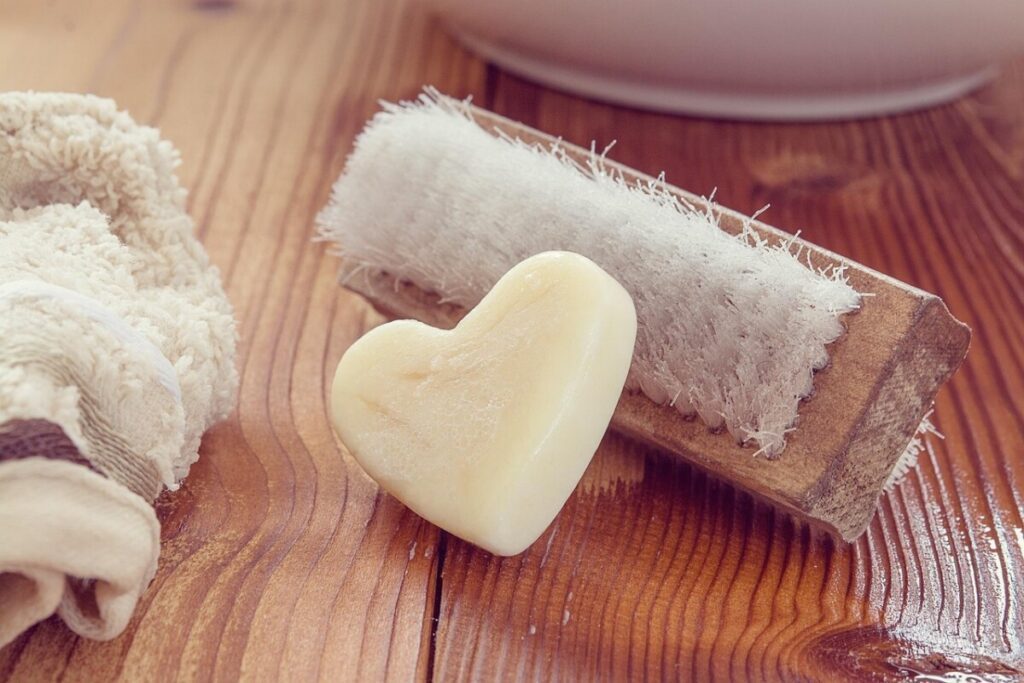
- Act quickly. Fresh stains come out more easily than dried ones.
- Remove solids and blot, never rub, which pushes soil deeper.
- Check the care label and test the bar on a hidden seam.
- Use cold water for blood and other protein stains. Use cool to lukewarm water for most others.
- Wet the stain and rub the bar on until a thin layer of soap covers it.
- Work it in gently with fingers or a soft brush. Do not scrub delicate fabric.
- Wait the time that fits the stain: about one minute for a light spot, as Fels-Naptha’s maker directs, and up to ten minutes for greasy marks.
- Wash as normal with detergent.
- Check the stain before drying. Air-dry if any mark remains and repeat.
Our article on soaking clothes in detergent helps if the stain needs more time.
When a Bar Is Not Enough
- Old, set protein stains: use an enzyme pre-treater or soak.
- Colored stains like wine or coffee after the bar: try an oxygen bleach on colorfast items.
- Dye transfer or ink: bars are not designed for them; use a product made for that stain.
- Delicate or dry-clean-only items: skip the bar and follow the label.
Never mix bleach with ammonia, vinegar or other cleaners, and keep all laundry products away from children and pets.
Choosing a Bar for Your Situation
Think about what you will actually use the bar for before you buy.
- If you mostly treat spots on work and school clothes, a compact stain bar with clear directions, such as Fels-Naptha, keeps things simple.
- If you hand wash often or want to grate soap, a big, plain laundry bar such as Zote lasts longer.
- If you react to fragrance, look at the wrapper for a fragrance-free bar, or skip bars and use a fragrance-free liquid. Our detergents and soap guide explains the options.
- If your water is hard, use the bar only on the stain, then wash with a detergent made for hard water.
Fabric Notes
Cotton, linen and polyester tolerate most bars. Silk and wool are protein fibers and prefer mild, pH-balanced products, so check the care label before using any alkaline soap on them. Dark and bright colors should be tested on a hidden seam, because strong rubbing can leave a pale patch. Never leave the soap sitting on a fabric for hours unless the label says that is fine.
Frequently Asked Questions
What Is the Best Bar Soap for Stains?
There is no single winner. Fels-Naptha is marketed specifically as a stain remover and Zote is a popular general laundry soap. Both suit fat-based stains best. Pick based on scent, size and your water.
Does Bar Soap Remove Old Stains?
Sometimes. Old oil stains may come out with a bar and repeated treatment, but set protein stains usually need an enzyme product and patience.
Can Bar Soap Set a Stain?
Soap does not set stains, but heat can. Avoid hot water on blood and keep the item out of the dryer until the stain is gone.
Should I Use a Bar or a Liquid Stain Remover?
Use a bar for greasy, dirty spots and a liquid enzyme stain remover for protein stains. Many households keep both. If you are unsure, start with the simplest safe step, a bar and cool water on a fresh spot, and escalate only if a mark remains after washing. Keep notes on what worked for your own fabrics and water, since that is better evidence than any ranking.
Bottom Line
A laundry bar is excellent for grease, collar grime and the oily part of makeup, and only a helper on blood and grass. Use the same simple method every time: act fast, treat gently, wash, then check before heat. When the bar stops being enough, reach for enzymes or oxygen bleach.
More on Laundry Soap Bars
- Zote Soap: What It Is and How to Use It for Laundry
- Fels-Naptha Laundry Soap Bar: What It Is, What It Does and Whether It Is Safe
- Fels-Naptha vs Zote: Which Laundry Bar Should You Use?
- Fels-Naptha Alternatives: What to Use Instead
- Can You Use Regular Bar Soap to Wash Clothes?
- Laundry Detergent Bars vs Liquid Detergent: Is a Bar Enough?
- 10 Best Laundry Soap Bars to Try
- How to Use Laundry Soap Bars
Dealing with a different stain? Try the Stain Finder, or print our one-page stain cheat sheet.